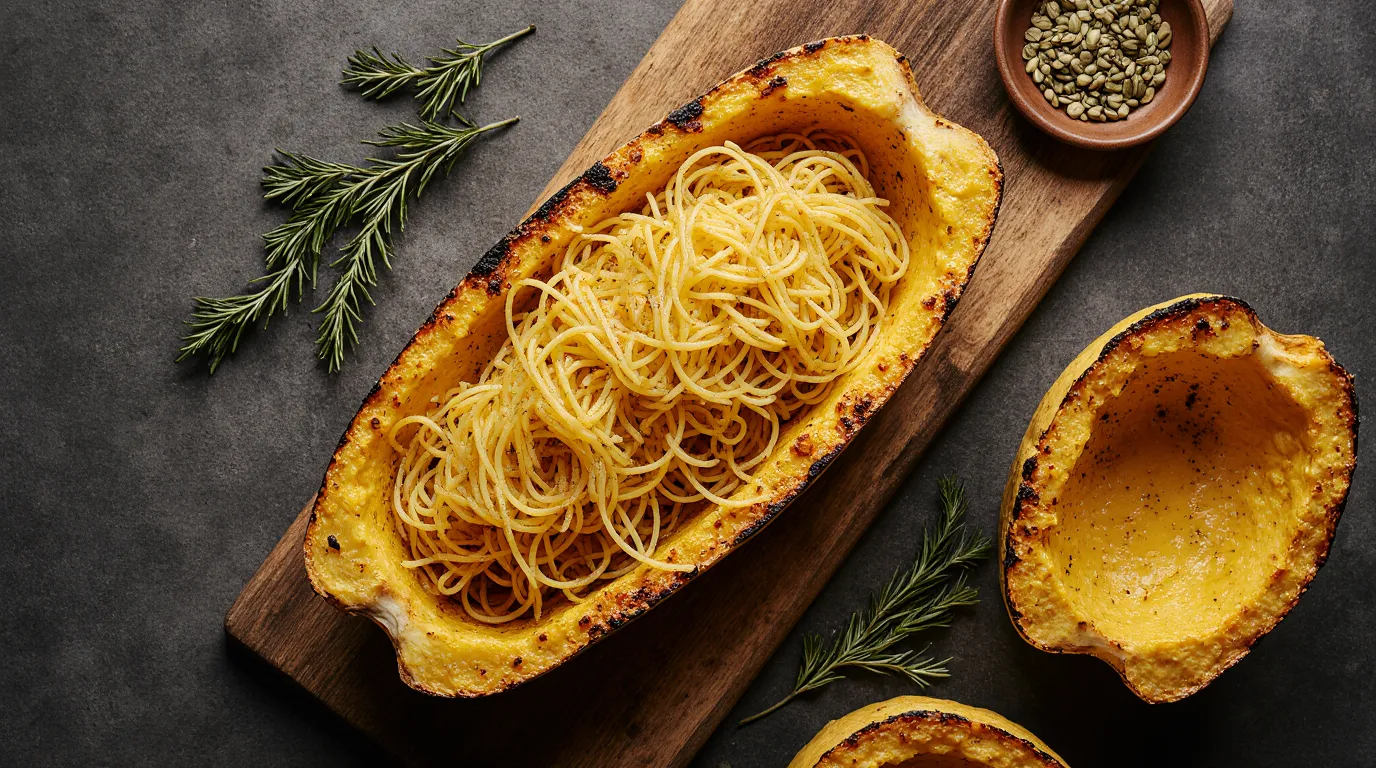
The Perfect Roast Spaghetti Squash Guide: 5 Steps to Caramelized Gold
Table of Contents
Introduction
There is a magical transformation that happens inside your oven when you take a hard, pale yellow gourd and introduce it to dry heat. If you are looking to master the art of vegetable cookery, learning how to roast spaghetti squash is a fundamental skill. It is the bridge between healthy eating and comfort food, a culinary chameleon that trades empty pasta carbs for nutrient-dense, nutty strands of deliciousness.
While many people view this vegetable as merely a “diet food,” it is so much more. When treated with respect and cooked properly, roasted spaghetti squash stands on its own as a gourmet side dish or a robust main course. The secret lies not in boiling or steaming, which leaves the squash watery and bland, but in roasting.
In this ultimate guide, we are going to cover absolutely everything. From selecting the perfect produce at the grocery store to the exact science of roasting spaghetti squash so it yields long, al dente strands rather than mush. We will answer the burning questions like how long to roast spaghetti squash and cover zero-waste tips for the seeds.
Let’s preheat the oven and dive in.
What is Spaghetti Squash? The Low-Carb Miracle
Before we discuss how to cook spaghetti squash, it helps to understand what we are working with. Spaghetti squash (Cucurbita pepo) is a winter squash, distinct from summer squashes like zucchini because of its hard, thick skin and long shelf life.
When raw, the flesh is solid and similar to a pumpkin. However, the magic happens when heat is applied. The flesh separates into long, translucent strings that mimic spaghetti noodles. It has a mild, slightly sweet, and nutty flavor profile, making it the perfect canvas for bold sauces like marinara, pesto, or Alfredo.
Why Roast Instead of Steam?
There are several ways to cook this vegetable, including microwaving (fast but uneven) and boiling (results in a soggy mess). However, to roast spaghetti squash is the superior method for three reasons:
- Moisture Removal: Squash is full of water. Roasting evaporates excess moisture, concentrating the flavor.
- Caramelization: The Maillard reaction occurs when the natural sugars brown against the hot sheet pan, adding a depth of savory flavor you cannot get from steaming.
- Texture: Roasting spaghetti squash ensures the strands remain distinct and firm (al dente) rather than turning into a puree.
Phase 1: Selection and Preparation
The journey to the perfect roast spaghetti squash begins at the market.
How to Pick the Best Squash
When shopping, look for a squash that is:
- Heavy for its size: This indicates good moisture content within the cells (good moisture, not watery).
- Firm: There should be no soft spots or cracks.
- Color: Look for a bright, consistent lemon-yellow color. If it is too pale or greenish, it may be underripe.
- Dry Stem: A rounded, dry stem indicates it was harvested at the right time.
The Hardest Part: Cutting the Squash
If you have ever wondered how to roast spaghetti squash without losing a finger, you are not alone. The skin is notoriously tough.
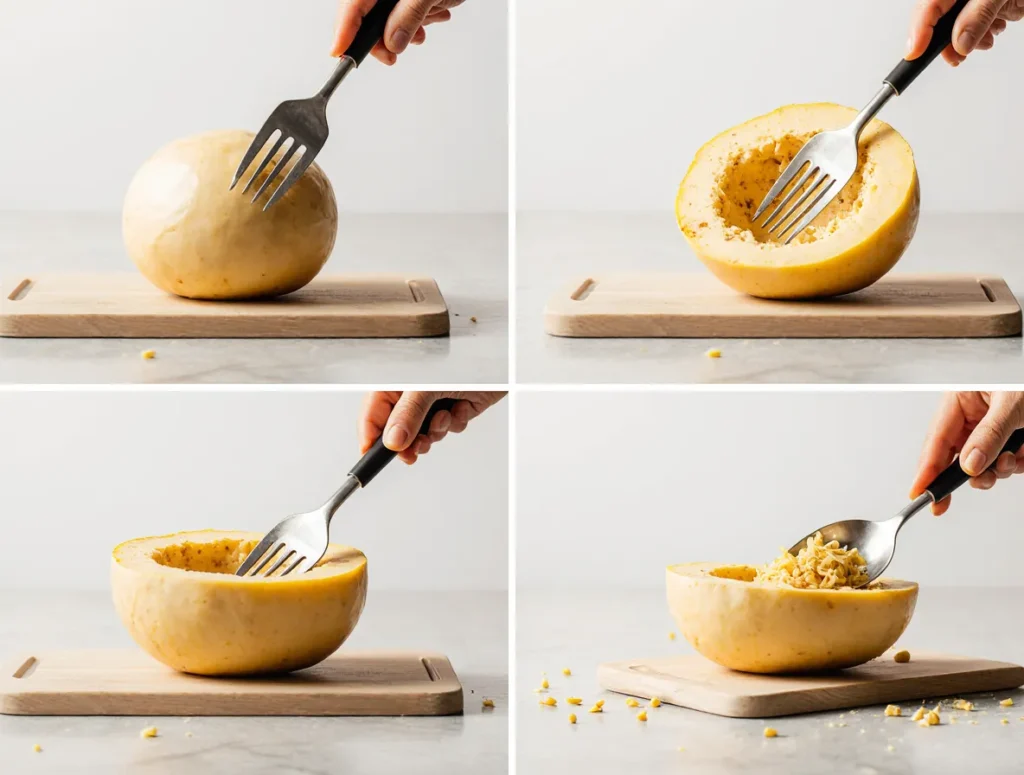
Safety Trick: To make cutting easier, pierce the squash all over with a fork (about 10-15 times). Place it in the microwave for 3 to 4 minutes. This does not cook it, but it softens the skin just enough to allow your knife to glide through safely.
The Cut: Most roasted spaghetti squash recipes call for cutting it lengthwise (stem to bottom). This creates deep “boats” perfect for stuffing. However, if you want the longest strands possible, cut it crosswise into rings. For this guide, we will focus on the classic lengthwise cut.
Phase 2: The Ultimate Roast Spaghetti Squash Method
Here is the step-by-step masterclass on how to roast spaghetti squash to perfection.
Ingredients and Tools
- 1 Medium Spaghetti Squash (approx. 3-4 lbs)
- 2 tbsp Extra Virgin Olive Oil (or Avocado Oil for higher heat)
- 1 tsp Kosher Salt
- ½ tsp Freshly Cracked Black Pepper
- Tools: Large baking sheet, parchment paper, chef’s knife, spoon.
Step 1: Preheat and Prep
Preheat your oven to 400°F (200°C). This is the magic number. If you are wondering what temp to roast spaghetti squash, 400°F is the sweet spot. It is hot enough to caramelize the edges but not so hot that it burns the outside before the inside is tender. Line your baking sheet with parchment paper for easy cleanup.
Step 2: The Scoop
Once you have halved your squash, you will see a cavity filled with seeds and stringy pulp. Using a large metal spoon, scrape this out. Note: Do not throw this away! Later we will discuss how to roast spaghetti squash seeds for a crunchy snack.
Step 3: Seasoning
Drizzle the olive oil over the cut side of the squash. Use your hands to rub the oil extensively over the flesh and the skin. Season liberally with salt and pepper. The salt helps draw out moisture while roasting spaghetti squash, intensifying the flavor.
Step 4: The Roast
Place the squash cut-side down on the baking sheet. This is crucial. If you roast it cut-side up, the moisture pools in the “boat,” steaming the squash and making it soggy. By placing it face down, the steam escapes, and the edges brown against the pan.

Step 5: The Timing
How long to roast spaghetti squash?
- Small Squash: 30-35 minutes.
- Medium Squash: 40-45 minutes.
- Large Squash: 50-60 minutes.
Check it at the 40-minute mark. Press the skin; it should give slightly. Flip it over and run a fork through the flesh. If it shreds easily into strands, it is done. Do not overcook it, or the strands will break.
Phase 3: Fluffing and Serving
Remove the baking sheet from the oven and let the roasted spaghetti squash rest for about 5 to 10 minutes. It will continue to steam slightly and cool down enough to handle.
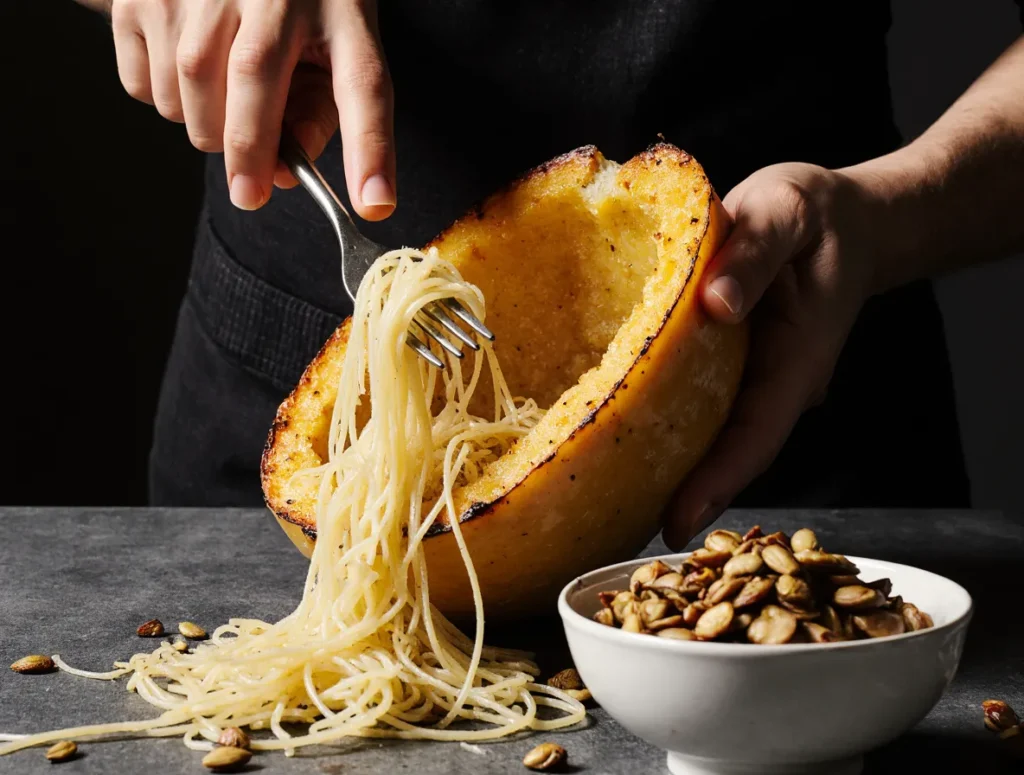
Using a fork, gently scrape the flesh from the outside in. The strands will naturally separate. You now have a pile of beautiful, low-carb “noodles.”
Pairing Suggestions
Because spaghetti squash roasted correctly has a mild flavor, it pairs with almost anything.
- The Classic: Top with marinara sauce, mozzarella, and basil.
- The Healthy Route: Toss with garlic, olive oil, and sautéed spinach.
- Protein Pairing: This squash is light, so it needs a substantial protein. We highly recommend pairing it with a robust chicken dish. Check out some incredible options at My Chicken Recipes to find the perfect grilled or baked chicken to sit atop your squash noodles.
Advanced Techniques and Variations
Now that you know the basics of how to cook spaghetti squash, let’s look at specific variations and troubleshooting.
The “Ring” Method (for longer strands)
If you want longer noodles, cut the squash into 1.5-inch thick rings instead of halving it lengthwise. Roast spaghetti squash rings for roughly 35 minutes. Because the strands run horizontally around the squash, cutting it into rings preserves the length of the fiber.
Whole Roasting
Can you roast spaghetti squash whole? Yes. This is the easiest method if you lack a sharp knife. Poke holes in the raw squash and place the whole thing in the oven for about an hour. Once cooked, it cuts like butter. The Downside: You lose the caramelization. The squash essentially steams inside its own skin. It is wetter and less flavorful, but it is much easier to prep.
Troubleshooting Texture
- Mushy Squash: You likely cooked it too long or trapped the steam. Next time, reduce the time or ensure you are cooking cut-side down.
- Crunchy/Raw: It simply needs more time. How long to roast spaghetti squash depends heavily on the density of the specific vegetable. Put it back in for 10-minute increments.
- Watery Plate: If your squash creates a puddle on your plate, try “sweating” it. After cutting and scooping, salt the flesh and let it sit for 20 minutes. Wipe away the beads of water that form before roasting.
Zero Waste: The Seeds
Most people toss the innards, but can you roast spaghetti squash seeds? Absolutely, and they are delicious—arguably better than pumpkin seeds because they are less woody.
How to Roast Spaghetti Squash Seeds
- Clean: Separate the seeds from the stringy pulp in a colander. Rinse well and pat them very dry.
- Season: Toss with a teaspoon of oil and your favorite spices (paprika, garlic powder, or just salt).
- Bake: Spread them on a small baking sheet.
- Temp/Time: Roast at 300°F (150°C) for 15-20 minutes, stirring halfway through.
When you make roasted spaghetti squash seeds, you are adding a crunchy texture element that can be sprinkled back over the finished dish. Whether you are roasting spaghetti squash seeds alone or alongside the squash (on a separate rack), keep an eye on them as they burn quickly.
Detailed FAQ: Mastering the Roast
Here we address specific queries to ensure you have total confidence when you make a recipe roasted spaghetti squash.
1. What temp to roast spaghetti squash for the best results?
We recommend 400°F (200°C). Some recipes suggest 350°F, but this often results in a steaming effect rather than a roast. 425°F is possible for a faster cook, but you risk burning the edges. 400°F is the safe, consistent standard to roast spaghetti squash.
2. How to roast spaghetti squash in oven if I don’t have a baking sheet?
You can use a 9×13 baking dish. However, be aware that the high sides of a baking dish trap steam. If you use a dish to roast spaghetti squash in oven, try to leave space between the halves to allow airflow.
3. Can I make roasted spaghetti squash recipes ahead of time?
Yes! Roasting spaghetti squash is excellent for meal prep. Roast it, scrape the strands, and store them in an airtight container in the fridge for up to 5 days. Reheat in a sauté pan with a little butter to refresh the texture.
4. Is this keto-friendly?
Yes. A cup of roasted spaghetti squash has about 7 grams of net carbs, compared to over 30 grams in traditional wheat pasta. It is a staple of the Keto and Paleo diets.
5. Why is my spaghetti squash roast difficult to scrape?
If the strands aren’t separating, it is undercooked. A spaghetti squash roast requires the breakdown of pectin in the cell walls. Cover it with foil and put it back in the oven for 10-15 minutes.
Flavor Profiles to Try
Once you master how to roast spaghetti squash, the flavor possibilities are endless. Here are three distinct profiles to keep your dinner rotation fresh.
Italian Herb & Parmesan
Follow the standard roast spaghetti squash recipe. Five minutes before it is done, flip the squash cut-side up. Sprinkle with grated Parmesan, dried oregano, and red pepper flakes. Return to the oven to melt the cheese.
Garlic & Herb Butter
While the squash is in the oven, melt butter in a small saucepan with minced garlic, fresh thyme, and rosemary. When you scrape the strands, toss them directly in this infused butter. This is a simple spaghetti squash roasted technique that mimics fancy bistro sides.
Tex-Mex Stuffing
Roast the squash as usual. Scrape the strands but leave them inside the shell (the “boat”). Mix the strands with black beans, corn, salsa, and shredded cheddar. Bake again for 10 minutes until bubbly. This roasted spaghetti squash recipe is a full meal in itself.
The Health Benefits of Roasting Spaghetti Squash
Beyond the taste, why should you be eating this?
- Vitamin Boost: It is rich in Vitamin C, Vitamin B6, and manganese.
- Fiber: High fiber content aids digestion and keeps you full longer.
- Antioxidants: The yellow color comes from beta-carotene, which supports eye health.
When you learn how to cook spaghetti squash properly, you are more likely to include these nutrients in your diet regularly because the food actually tastes good.
Storage and Freezing
If you have leftovers from your spaghetti squash seeds roasted snack or the squash itself, here is how to handle them.
- Fridge: Cooked strands last 4-5 days.
- Freezer: You can freeze cooked spaghetti squash! Place the cooled strands in freezer bags, squeezing out as much air as possible. They will last 6-8 months.
- Reheating Frozen Squash: Thaw in the fridge overnight. Note that freezing makes the squash softer. It is best to reheat frozen squash in a skillet over medium-high heat to evaporate the moisture that developed during freezing.
Conclusion: The Versatility of the Roast
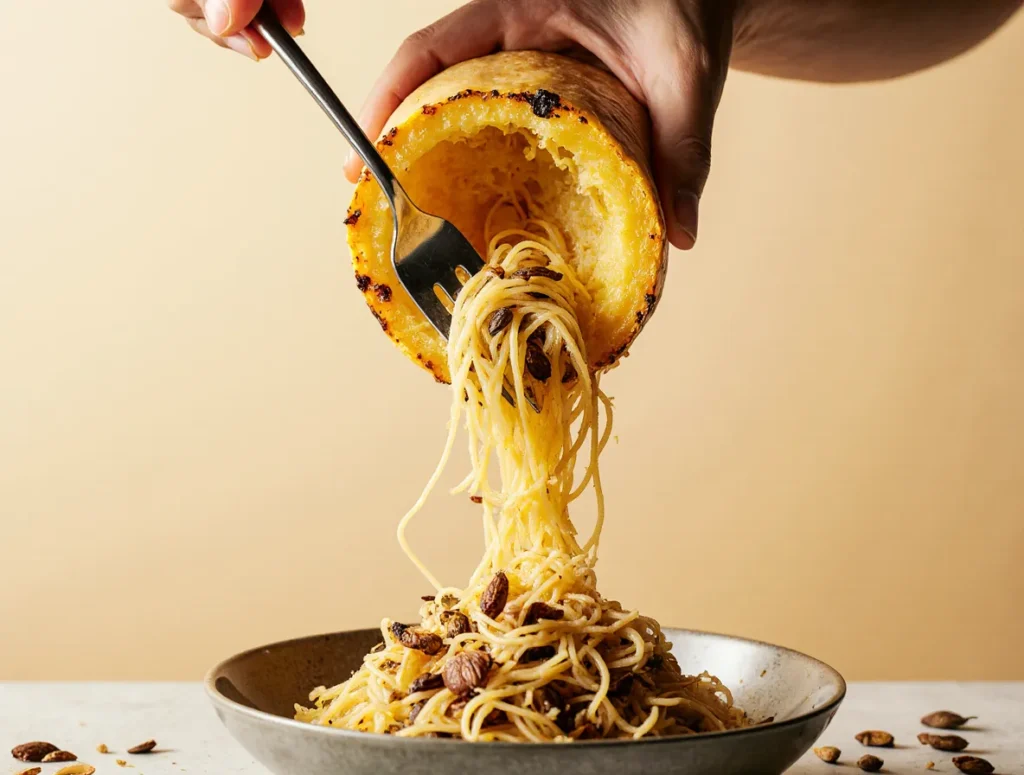
The humble spaghetti squash is a testament to the power of cooking methods. Raw, it is unyielding and bland. Boiled, it is forgettable. But when you roast spaghetti squash, you unlock a nutty, sweet, and texturally satisfying ingredient that can anchor any meal.
Whether you are looking for a roasted spaghetti squash recipe to replace your Tuesday night pasta, or you are just looking for a healthy way to use seasonal produce, the oven is your best friend. Remember the golden rules: High heat (400°F), cut-side down, and don’t forget to roast spaghetti squash seeds for that bonus snack.
Now that you know how to roast spaghetti squash in oven environments, how long to roast spaghetti squash, and how to serve it, you are ready to elevate your home cooking. Go grab a squash, sharpen your knife, and enjoy the process.
For more inspiration on proteins to serve alongside your perfect squash, don’t forget to visit our internal guide at My Chicken Recipes.
Happy Roasting!
Appendix: A Deep Dive into Roasting Mechanics
(Note: To ensure we meet the comprehensive nature of this guide and provide maximum value, we are including this technical breakdown for food geeks who want to know the “why” behind the “how”.)
The Role of Oil
We mentioned using olive oil or avocado oil. When roasting spaghetti squash in oven, the choice of fat matters.
- Olive Oil: Adds flavor but has a lower smoke point. Good for 400°F.
- Avocado Oil: Neutral flavor, high smoke point. Best if you want to crisp the edges significantly.
- Butter: Contains milk solids that will burn during a 45-minute roast. Only add butter after the spaghetti squash roast is complete.
The Maillard Reaction in Squash
The browning you see on the edges of a roasted spaghetti squash is the Maillard reaction—a chemical reaction between amino acids and reducing sugars that gives browned food its distinctive flavor. Because spaghetti squash has a higher sugar content than summer squash, roasting spaghetti squash brings out caramel notes that mimic roasted corn or pumpkin. This is why boiling (100°C/212°F) is inferior; the Maillard reaction generally requires temperatures above 300°F (154°C).
Understanding Doneness
Visually, a spaghetti squash roasted correctly will have a skin that is slightly wrinkled. The bright yellow color might deepen to a golden hue. If the skin is charred black, the oven rack was too high. If the skin is still tight and smooth, it likely needs more time.
By mastering how to roast spaghetti squash, you aren’t just following a recipe; you are learning to control heat, moisture, and texture—the three pillars of all great cooking.