The Ultimate Cold Smoked Salmon Guide: 7 Steps to Perfection
Table of Contents
Introduction
There is a distinct luxury associated with a silky, translucent slice of cold smoked salmon. It is the centerpiece of the Sunday brunch, the star of the hors d’oeuvre platter, and one of the most beloved delicacies in the culinary world. But for many home cooks, the idea of making it at home is intimidating. It feels like a dark art reserved for professional smokehouses.
I am here to tell you that this is a myth. Learning how to make smoked salmon at home is not only achievable, but it also produces results that are infinitely superior to—and significantly cheaper than—the vacuum-sealed packages you buy at the grocery store.
In this extensive guide, we will strip away the mystery. We will cover the science of curing, the importance of temperature control, and the exact equipment you need. Whether you are a veteran pitmaster or a complete novice wondering how to do smoked salmon for the first time, this is the only resource you will ever need.
Part 1: What is Cold Smoked Salmon?
Before we light the sawdust, we must define our subject. What is cold smoked salmon?
Unlike hot smoking, which cooks the fish at temperatures between 120°F and 180°F (resulting in a flaky, baked texture), cold-smoked salmon is processed at temperatures below 80°F (27°C). The fish is not “cooked” by heat. Instead, it is preserved through a combination of salt curing and long exposure to cool wood smoke.
This process leaves the texture raw, silky, and sliceable, similar to sashimi but with a firmer bite and a complex smoky aroma.
Is Cold Smoked Salmon Raw?
A common question beginners ask is: is cold smoked salmon raw? Technically, yes. The fish has not been subjected to heat high enough to denature the proteins in the way cooking does. However, it is not “raw” in the same sense as fresh fish straight out of the water. It has been cured. The salt draws out moisture, creating an environment where bacteria struggle to survive, and the smoke compounds act as preservatives.
Is Cold Smoked Salmon Safe to Eat?
Because the fish is not cooked with heat, safety is paramount. Is cold smoked salmon safe to eat? Yes, provided you follow the correct procedures. This involves using high-quality, sushi-grade fish, maintaining proper hygiene, and adhering to strict curing times. Many people also choose to freeze their salmon before or after smoking to eliminate any potential parasites, a standard practice in the sushi industry.
Part 2: The Great Debate: Hot vs Cold Smoked Salmon
To understand the nuance, we must look at hot vs cold smoked salmon.
- Texture:
- Cold Smoked: Smooth, glossy, translucent, sliceable.
- Hot Smoked: Flaky, opaque, dry (similar to baked salmon).
- Flavor:
- Cold Smoked: Salty, subtle smoke, fresh fish flavor.
- Hot Smoked: Rich, heavily smoky, roasted flavor.
- Usage:
- Cold Smoked: Bagels, canapes, salads.
- Hot Smoked: Chowders, pasta flakes, dips.
Understanding cold smoked vs hot smoked salmon is vital because the equipment and techniques are completely different. You cannot simply turn your grill down low; you need a specific setup to keep the heat away from the fish. If you are looking for the flaky variety, you are in the wrong place. If you are looking for that glossy “Nova lox” style, read on.
Part 3: Equipment and Ingredients
You do not need an industrial smokehouse to learn how to cold smoke salmon. You can adapt equipment you likely already own.
The Gear
- The Chamber: You need a container to hold the smoke. This can be a dedicated smoker, a kettle grill, or even a cardboard box (yes, really).
- The Smoke Generator: This is the most critical tool. You cannot use charcoal or wood chunks, as they generate too much heat. You need a salmon cold smoker attachment, typically a “pellet tube” or a “maze smoke generator” that smolders sawdust or pellets slowly without creating a flame.
- Digital Thermometer: To monitor the ambient temperature. It must stay under 80°F.
- A Sharp Knife: For slicing the finished product paper-thin.
The Salmon
Start with the best fish you can afford. Atlantic Salmon is the industry standard for cold-smoked salmon because of its high fat content. The fat absorbs the smoke flavor beautifully and keeps the texture buttery. Sockeye or King salmon are also excellent but have a stronger fish flavor and lower fat content, resulting in a firmer, leaner product.
The Cure Ingredients
- Kosher Salt: The workhorse. Do not use table salt (it contains iodine which ruins the flavor).
- Sugar: Brown sugar or white sugar helps balance the harshness of the salt and aids in the curing process.
- Aromatics: Dill, crushed peppercorns, juniper berries, or citrus zest.
Part 4: The Master Recipe (Step-by-Step)
Here is the definitive cold smoked salmon recipe. We will break this down into seven distinct steps.
Step 1: Preparation and Pin Boning
Rinse your salmon fillet and pat it completely dry. Run your fingers down the center line of the fillet to feel for pin bones. Use sterilized needle-nose pliers or fish tweezers to pull them out in the direction of the grain. This ensures your making cold smoked salmon experience doesn’t end with a bone in your throat.
Step 2: The Cure (Gravlax Phase)
This is arguably more important than the smoking phase. The Ratio: A classic cure is 2 parts salt to 1 part sugar.

- 1 cup Kosher Salt
- ½ cup Brown Sugar
- 1 tbsp Cracked Black Pepper
Mix the ingredients. Lay a long piece of plastic wrap on your counter. Spread half the cure mix on the plastic. Place the salmon skin-side down onto the mixture. Pack the remaining cure over the top of the flesh, ensuring the thickest parts are well covered.
Wrap the salmon tightly in the plastic. Place it in a baking dish and weigh it down with heavy cans or bricks. Refrigerate for 24 hours. The salt will draw out moisture, curing the fish.
Step 3: The Rinse and The Pellicle
After 24 hours, unwrap the fish. It will feel firm and stiff. Rinse the cure off thoroughly under cold running water. Crucial Step: Pat the fish dry and place it on a wire rack in the fridge, uncovered, for another 12 to 24 hours. You want the surface to dry out and form a tacky, shiny layer called the pellicle. Smoke adheres to the pellicle; it slides right off a wet fish. If you skip this, you won’t get good color or flavor.
Step 4: Setting Up the Smoker
Now we get to the core of how to cold smoke salmon. Fill your pellet tube or maze generator with wood dust (Alder wood is traditional and mild; Beech or Apple are also great). Light the dust and let it smolder. Place the generator in the bottom of your smoker or grill. Place the salmon on the top rack, as far away from the heat source as possible.

Step 5: The Smoke
How long to cold smoke salmon? Ideally, between 6 to 12 hours.
- 6 Hours: Mild smoke flavor.
- 12 Hours: Robust, deep smoke flavor.
Monitor the temperature constantly. If it rises above 80°F, the fat will render, and the fish will cook. If it’s a hot day, place a tray of ice in the smoker between the smoke source and the fish to cool the air.
Step 6: The Rest (The Patience Test)
Once the smoking is done, do not eat it yet. The smoke flavor will be acrid and harsh on the surface. Wrap the salmon in plastic wrap again and let it rest in the fridge for at least 24 to 48 hours. This allows the smoke compounds to diffuse through the meat, mellowing out and becoming delicious.
Step 7: Slicing and Storing
Using your sharpest knife, slice the salmon on a bias (at an angle) into thin, translucent sheets. Vacuum seal what you won’t eat immediately.
Part 5: Detailed Troubleshooting and Tips
Even when you know how to make smoked salmon, issues can arise.
Problem: The fish is too salty.
- Solution: Next time, cure for less time (12-18 hours) or soak the fish in cold water for 30 minutes after rinsing the cure off to desalinate it.
Problem: The texture is mushy.
- Solution: You likely didn’t cure it long enough to remove the water, or you sliced it before it had time to rest.
Problem: The fish cooked/rendered fat.
- Solution: Your smoker got too hot. You must maintain the temperature. If you live in a hot climate, cold smoking is best done at night or during winter months.
Fun Trivia: If you enjoy word games, you might have seen “Lox” as a cold smoked salmon crossword clue. While often used interchangeably, Lox is traditionally just brine-cured belly, whereas our Nova-style salmon is cured and smoked.
Part 6: Alternative Methods
Smoked Salmon in Oven
Can you do this indoors? How to roast spaghetti squash is easy in an oven, but smoking is harder. However, you can make smoked salmon in oven environments if you use a specific technique. You cannot light a fire in your oven. instead, you can use “liquid smoke” in your cure to simulate the flavor, then dry the fish in the oven on the lowest setting (with the door cracked) to create the texture. It isn’t authentic cold smoke salmon, but it works in a pinch.
The “Cheat” Method
If you are wondering how to do smoked salmon without any gear, simply cure the salmon as described in Step 2, adding a teaspoon of high-quality liquid smoke to the cure mixture. This produces “Gravlax with a smoky hint” which is delicious, though different from true cold-smoked salmon.
Part 7: Culinary Uses: Best Cold Smoked Salmon Recipes
Now that you have pounds of delicious fish, what do you do with it? Here are three cold smoked salmon recipes to try.
1. The Classic New York Bagel
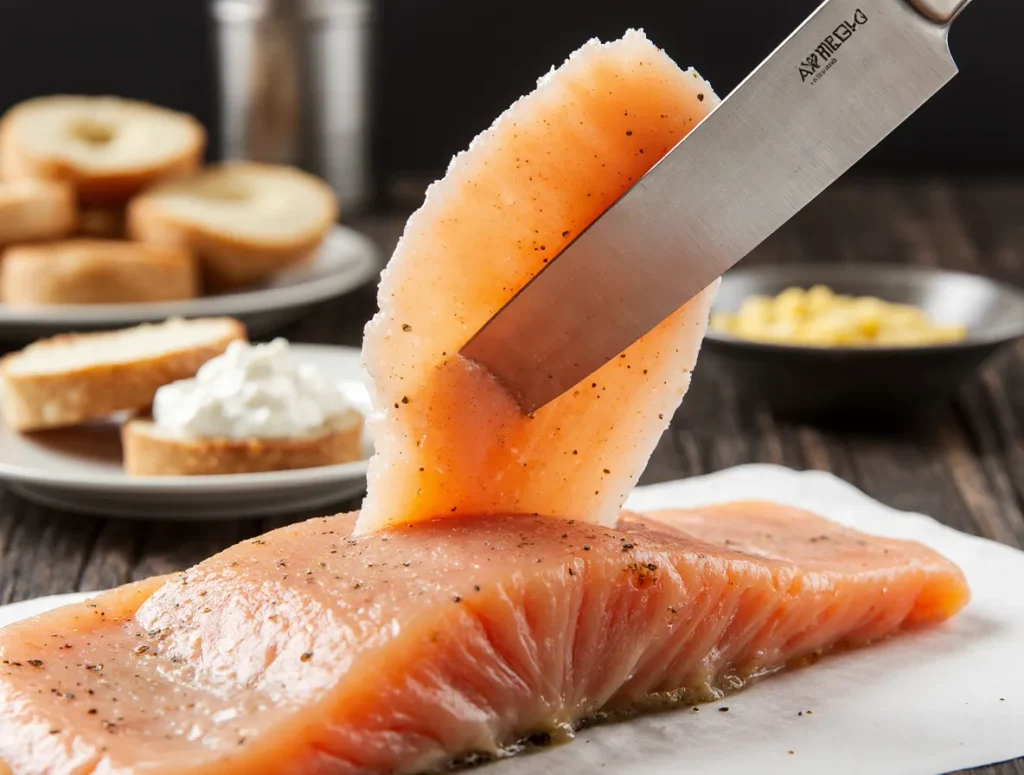
This is the gold standard. A toasted everything bagel, a thick smear of plain cream cheese, capers, thinly sliced red onion, fresh dill, and a generous heap of your homemade salmon.
2. Smoked Salmon Pasta Carbonara
Instead of bacon, use strips of smoked salmon.
- Note: Add the salmon at the very end. Do not cook it in the pan, or it will become salty and tough. The residual heat of the pasta will warm it perfectly.
3. Smoked Salmon Mousse
Blend 8oz of cream cheese, 4oz of your smoked salmon, lemon juice, and chives in a food processor until fluffy. Serve on cucumber rounds or crackers.
Pro Tip: If you are hosting a brunch and have guests who prefer poultry over seafood, offer a variety of proteins. You can find excellent guides on preparing crowd-pleasing chicken dishes atMy Chicken Recipes. It is always good to have internal links to other cooking techniques!
Part 8: Advanced Techniques and Variations
Flavoring the Cure
Once you master the basic cold smoked salmon recipe, start experimenting.
- Beetroot Cure: Add grated raw beet to the salt mix. It dyes the outside of the salmon a vibrant purple/pink.
- Whiskey Cure: Brush the salmon with Bourbon or Scotch before applying the salt.
- Maple Glaze: Brush the fish with maple syrup during the drying phase (Step 3) for a “candied” edge.
Wood Selection
The type of wood dust you use in your salmon cold smoker changes the profile.
- Alder: The traditional choice for seafood. Mild and sweet.
- Hickory/Oak: Very strong. Use sparingly or mix with fruit wood.
- Apple/Cherry: Sweet and fruity. Perfect for beginners.
Part 9: Health and Nutrition
We discussed is cold smoked salmon safe to eat, but is it healthy? Absolutely. It is packed with Omega-3 fatty acids, high-quality protein, and Vitamin B12. However, it is high in sodium due to the curing process. If you are watching your salt intake, you can soak the fish in fresh water for an hour after curing to pull out excess salt before smoking.
Part 10: Frequently Asked Questions (FAQ)
Here we will address the specific keywords and questions you might still have.
Q: How do you cold smoke salmon if you don’t have a pellet tube? A: You can use a fine mesh sieve filled with sawdust. Light the sawdust from the bottom with a torch, let it smolder, and place it in the bottom of your grill.
Q: What is the difference between hot smoked salmon vs cold smoked salmon in terms of storage? A: Hot smoked salmon, because it is cooked, lasts a bit shorter in the fridge (3-4 days). Cold smoked salmon, because of the heavy cure and smoke, can last 1-2 weeks in the fridge if vacuum sealed, and months in the freezer.
Q: How to eat cold smoked salmon properly? A: Keep it simple. Lemon juice, black pepper, and maybe a little crème fraîche are all you need. Do not heat it up, or you will ruin the texture you worked so hard to achieve.
Q: How to serve cold smoked salmon for a party? A: Create a “board.” Lay out the sliced salmon, wedges of lemon, capers, diced onions, chopped egg whites and yolks, and toast points. Let guests assemble their own bites.
Q: Can you freeze cold smoked salmon? A: Yes! In fact, slicing it partially frozen is easier. Vacuum seal it, and it keeps perfectly.
Q: How to make cold smoked salmon with a gas grill? A: You won’t turn the gas on. You just use the grill as the “box.” Place your smoke tube on the grates, put the fish on the upper rack, and close the lid.
Conclusion: Mastering the Art
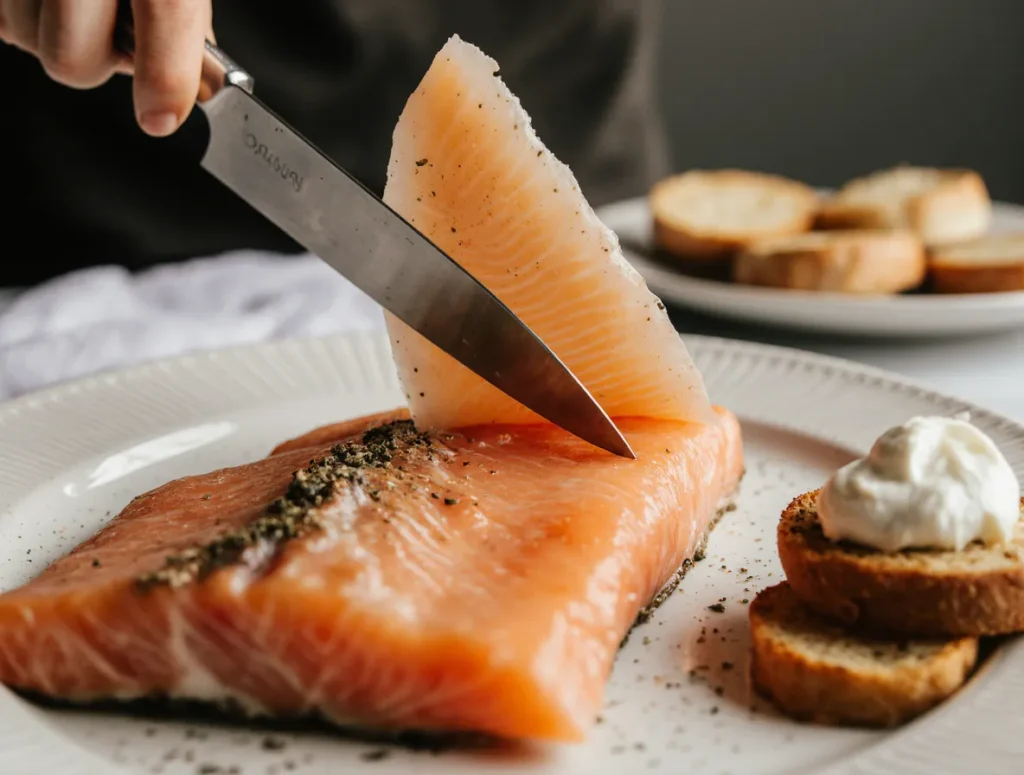
Learning how to cold smoke salmon is a journey of patience and precision. It connects you to an ancient method of food preservation that predates refrigerators. There is a profound satisfaction in slicing into a fillet that you cured and smoked yourself, revealing that perfect, glistening orange interior.
Whether you are looking for new cold smoked salmon recipes, trying to figure out how to make smoked salmon for the holidays, or just curious about how to do smoked salmon as a hobby, remember the three golden rules:
- Keep it Clean: Hygiene is everything.
- Keep it Cool: Never let the temp go above 80°F.
- Keep it Dry: The pellicle is the secret to success.
Once you taste your homemade version, you will never go back to the store-bought packets again. It is richer, fresher, and made with pride.
So, grab your sawdust, buy that side of Atlantic salmon, and get smoking.