The Ultimate Guide to the Perfect Delmonico Steak: 7 Steps to Culinary Bliss
Table of Contents
Introduction
There is a sound that every carnivore knows and loves: the aggressive sizzle of a well-marbled piece of beef hitting a scorching hot cast-iron skillet. Among the pantheon of great beef cuts, one name carries a legacy of luxury, mystery, and unparalleled flavor: the delmonico steak.
If you have ever stared at a butcher’s case confused by the labeling, or if you have ever sat in a high-end steakhouse wondering why this specific cut commands such respect, you are not alone. The delmonico steak is perhaps the most famous, yet most misunderstood, item on the American menu.
In this extensive guide, we are going to peel back the layers of history. We will answer the burning question: what is a delmonico steak? We will dive deep into the anatomy of the cow, explore the science of the sear, and finally, provide you with a delmonico steak recipe that will ruin you for all other steakhouses.
Grab your apron and sharpen your knives. This is the only guide you will ever need.
🥩 The Legend Begins: What is a Delmonico Steak?
To understand the meat, you must understand the history. The term does not refer to a specific anatomical muscle in the way “filet mignon” or “T-bone” does. Rather, the delmonico steak is a method of preparation and a historical nod to the golden age of American dining.
The History of Delmonico’s
In the mid-19th century, specifically 1837, Delmonico’s Restaurant opened in Lower Manhattan. It was the first dining establishment in the United States to use a printed menu and separate tables. It was the epitome of fine dining. Their signature dish, the delmonico steak, became the stuff of legend.
But here lies the controversy that fuels butcher shop arguments to this day: what is a delmonico steak originally?
In the 1850s, there was no uniform meat grading system. The chefs at Delmonico’s simply bought the absolute best cut of meat available that day. However, culinary historians largely agree that the original cut was likely a boneless rib cut from the chuck eye section—specifically the first few inches of the chuck eye where it meets the ribeye.
Modern Interpretations
Today, if you ask a butcher what is delmonico steak, you might get different answers depending on where you live.
- The Chuck Eye: A budget-friendly but incredibly flavorful cut from the shoulder.
- The Boneless Ribeye: The most common modern interpretation.
- The Top Loin: Occasionally sold as a Delmonico in certain regions.
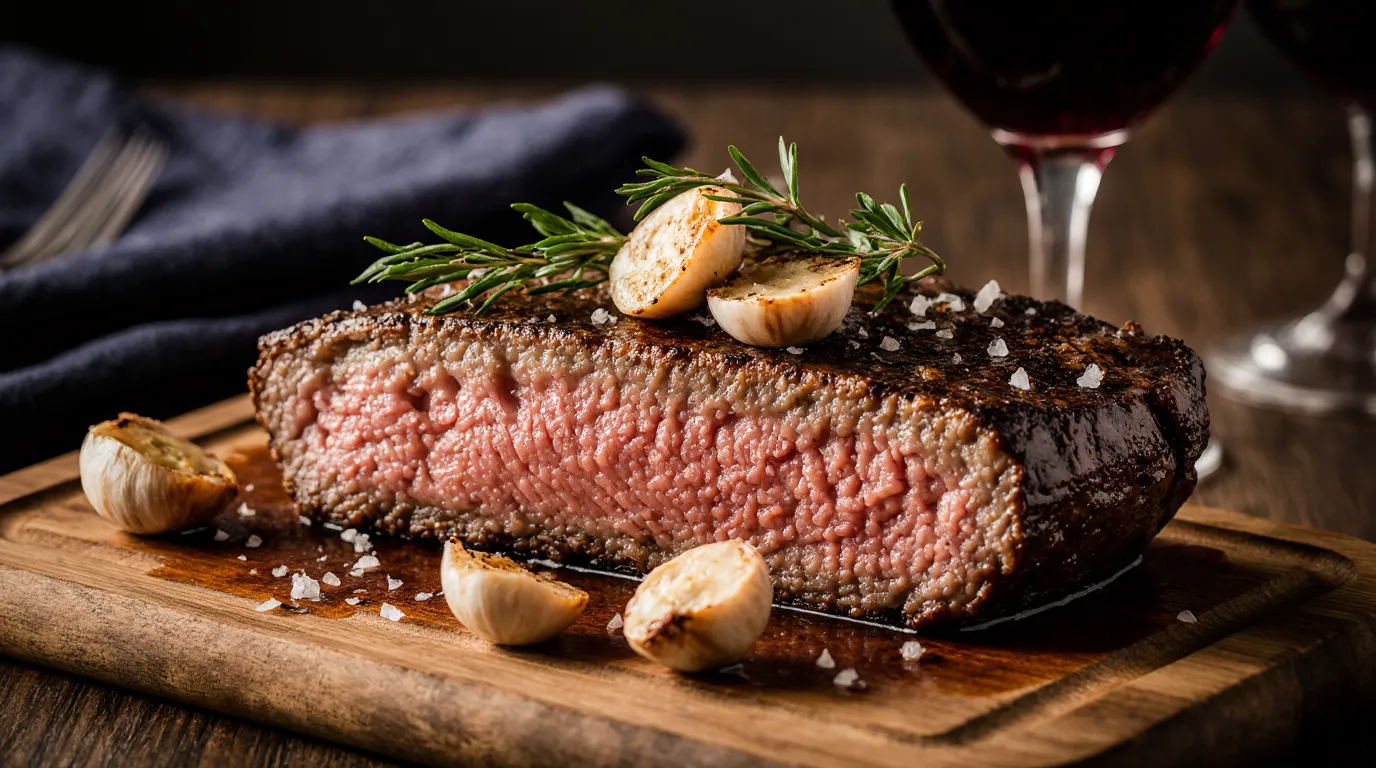
Despite the variations, a true modern delmonico steak is generally accepted to be a thick-cut, boneless ribeye, boasting intense marbling and rich flavor.
🔪 Decoding the Butcher’s Counter: The Delmonico Steak Cut
When you are hunting for this steak, specificity is key. The delmonico steak cut is prized because it balances the tenderness of a filet with the robust, beefy flavor of a strip steak.
The Anatomy of Flavor
What cut of beef is a delmonico steak? Technically, it comes from the Longissimus dorsi muscle. This is the pair of long, tender muscles that run down the spine of the steer. Because these muscles do very little work, they remain incredibly tender.
When looking for the perfect delmonico steak cut, you are looking for:
- Thickness: At least 1.5 to 2 inches thick. A thin steak is not a delmonico steak.
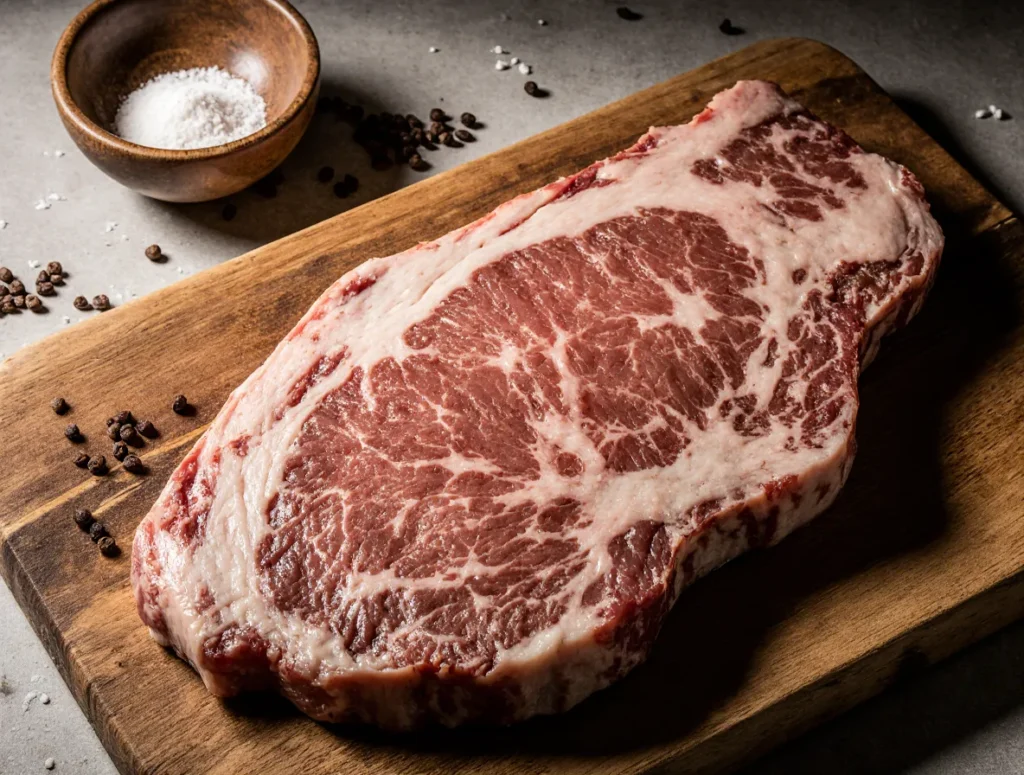
- Marbling: You want extensive intramuscular fat (the white flecks inside the red meat). This fat renders down during cooking, basting the meat from the inside out.
- The Cap: If you are lucky, your delmonico ribeye steak will include the Spinalis dorsi, or the ribeye cap. This is widely considered the most delicious bite of beef on the entire animal.
Ribeye vs. Delmonico: Clearing the Confusion
A common question arises: what is the difference between ribeye and delmonico steaks?
- The Ribeye: Can be bone-in (Tomahawk or Cowboy) or boneless. It can be cut from anywhere in the rib primal (ribs 6 through 12).
- The Delmonico: Is always boneless. It is typically cut thicker than a standard ribeye and, in the strictest traditional sense, comes from the section where the rib meets the chuck.
So, while all modern Delmonicos are essentially ribeyes, not all ribeyes are Delmonicos. The distinction lies in the quality, the thickness, and the presentation.
🛒 Sourcing Your Meat: Quality Matters
You cannot cook a 5-star meal with 1-star ingredients. When shopping for your delmonico steak recipe, avoid the pre-packaged styrofoam trays if possible. Go to a dedicated butcher counter.
Grading
Look for prime delmonico steak. The USDA grades beef based on marbling and the age of the animal.
- Select: Lean, less juicy. Avoid for this recipe.
- Choice: Good quality, readily available.
- Prime: The top 2% of beef. Abundant marbling. If you can afford a prime delmonico steak, it is worth the investment for the melt-in-your-mouth texture.
The Dry Age Difference
If you want to elevate your dish to stratospheric levels, ask for a dry aged delmonico steak. Dry aging involves hanging the beef in a temperature-controlled environment for weeks. This process does two things:
- Evaporation: Moisture leaves the steak, concentrating the beef flavor.
- Enzymatic Breakdown: Natural enzymes break down connective tissue, making the delmonico steak impossibly tender.
A dry aged delmonico steak will have a nutty, blue-cheese-like aroma and a depth of flavor that fresh beef simply cannot match.
🔥 The Science of Cooking: How to Prepare Delmonico Steak
Before we get to the heat, we must discuss prep. How to prepare delmonico steak is just as important as how you cook it.
1. Temperature Normalization
Never cook a cold steak. Take your delmonico steak out of the refrigerator at least 60 minutes before cooking. If you throw a cold steak into a hot pan, the muscle fibers seize up, and the inside will remain raw while the outside burns.
2. The Dry Brine
Moisture is the enemy of the sear. Pat your steak completely dry with paper towels. Generously salt the steak with Kosher salt 45 minutes prior to cooking. This is known as dry brining. The salt draws moisture out, dissolves into a brine, and is reabsorbed, seasoning the meat deep inside.
3. The Truss (Optional)
Since the delmonico steak cut can be slightly oval or irregular, some chefs use butcher’s twine to tie it into a tight circle. This ensures even cooking, though it is not strictly necessary for a home cook.
🍳 Method 1: The Reverse Sear (The Gold Standard)
If you are asking how to cook delmonico steak perfectly every single time, the answer is the reverse sear. This method cooks the steak gently in the oven first and finishes with a high-heat sear. It eliminates the “bullseye” gradient of doneness, giving you edge-to-edge pink perfection.
The Perfect Delmonico Steak Recipe (Reverse Sear)
Yields: 2 Servings Prep Time: 1 Hour Cook Time: 45 Minutes
Ingredients:
- 2 Delmonico steaks (1.5 inches thick minimum)
- Kosher salt
- Coarsely cracked black pepper
- 2 tbsp high smoke point oil (Avocado or Grapeseed)
- 3 tbsp unsalted butter
- 3 sprigs fresh rosemary
- 3 sprigs fresh thyme
- 2 cloves garlic, crushed
Instructions:
- Preheat: Set your oven to a low temperature, ideally 225°F (107°C).
- Season: If you haven’t dry-brined, season the steaks liberally with salt and pepper now.
- The Slow Roast: Place the steaks on a wire rack set over a baking sheet. This allows airflow around the delmonico steak. Place in the oven.
- Monitor: You need a meat thermometer. Cook until the internal temperature reaches 115°F (for medium-rare). This usually takes 30-45 minutes depending on thickness.
- Rest: Remove from the oven. The steaks will look gray and unappealing. Do not panic. Let them rest for 10 minutes.
- The Sear: Heat your cast-iron skillet until it is smoking hot. Add the oil.
- The Crust: Carefully lay the steaks in the pan. Sear for 60 seconds on the first side.
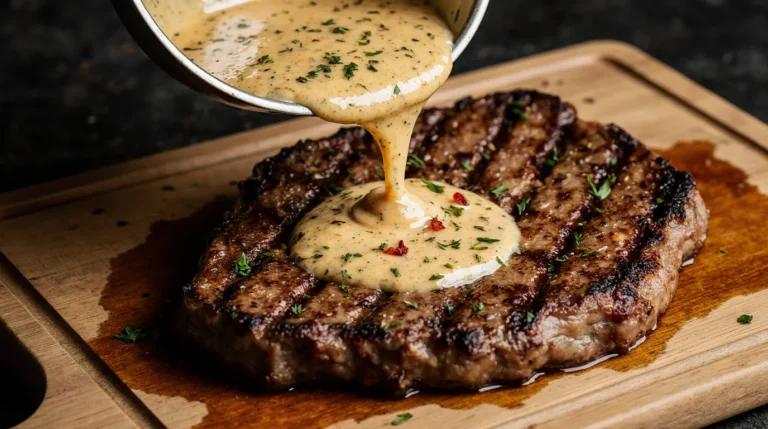
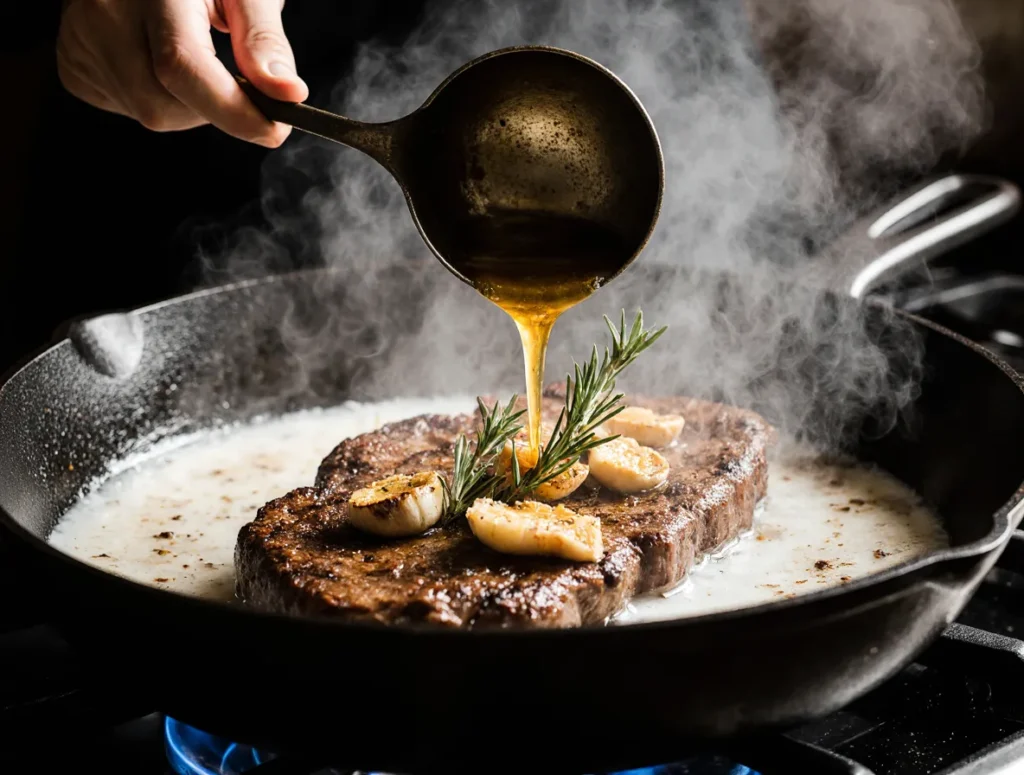
- The Baste: Flip the steaks. Immediately toss in the butter, garlic, and herbs. Tilt the pan and spoon the foaming hot butter over the steaks continuously for another 45-60 seconds.
- Serve: Remove from heat and serve immediately (since they already rested).
This is the definitive answer to how do i cook a delmonico steak with professional results.
🍳 Method 2: The Classic Pan-Sear & Oven Finish
If you are short on time and wondering how to cook a delmonico steak the traditional way, use the Pan-Sear/Oven Finish method.
- Preheat oven to 400°F (200°C).
- Heat an oven-safe skillet on high heat.
- Sear the seasoned delmonico steak for 2 minutes on each side to develop a deep brown crust.
- Transfer the entire skillet into the hot oven.
- Roast for 5-7 minutes until the internal temperature reaches 130°F (medium-rare).
- Rest for 10 minutes on a cutting board before slicing.
This method is faster and explains how do you cook a delmonico steak in most restaurant settings.
♨️ Method 3: Fire and Smoke – How to Grill Delmonico Steak
Summer calls for charcoal. How to grill delmonico steak requires a two-zone setup to prevent flare-ups from the high fat content.
- Setup: Bank your coals to one side of the grill (direct heat) and leave the other side empty (indirect heat).
- Sear: Place the delmonico steak over the direct heat. Sear for 2 minutes per side. Watch for flare-ups! The dripping fat from a delmonico ribeye steak is flammable.
- Move: Move the steaks to the cool side (indirect heat). Close the lid.
- Finish: Cook until internal temperature reaches 130°F.
- Rest: Always rest your meat.
🍽️ Variations and Pairings
Now that you have the recipe for delmonico steak, what do you serve with it?
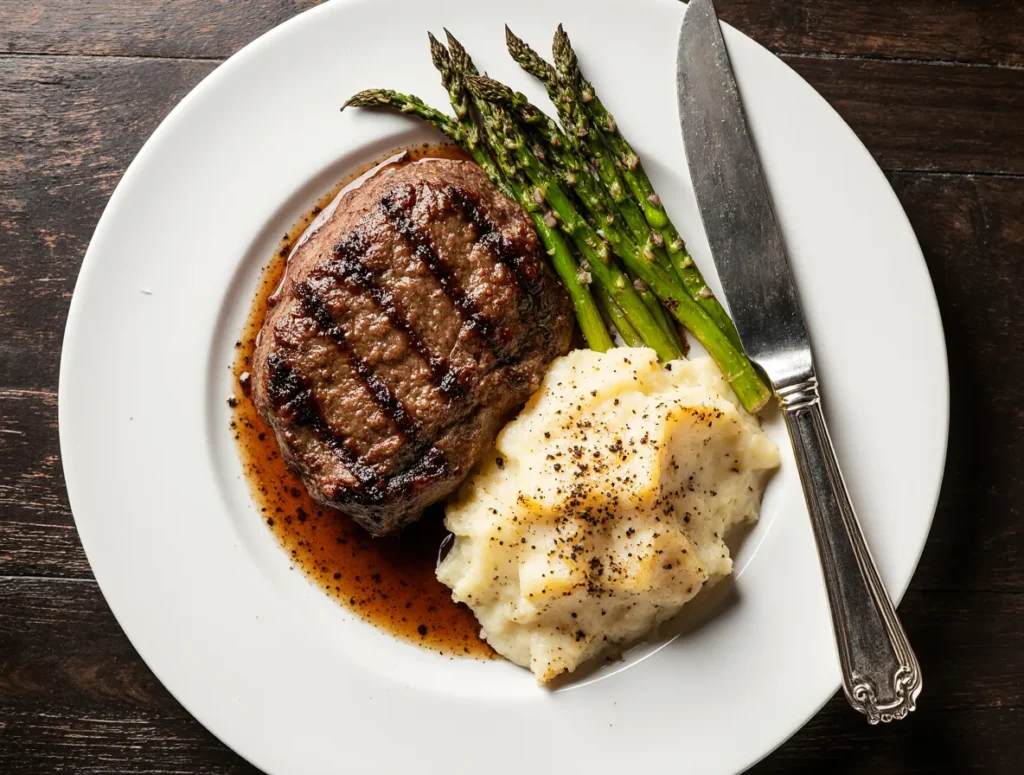
The Classic Delmonico Potatoes
You cannot serve this steak without its historical partner. Delmonico potatoes are a rich, cheesy gratin made with heavy cream, white pepper, and Parmesan cheese.
Lighter Options
A delmonico steak is heavy. To balance the richness, consider an acidic salad or grilled asparagus.
- Internal Link Suggestion: If you are planning your weekly menu and need something lighter to balance out this red meat feast, check out the poultry options at MyChickenRecipes for healthy, lean protein ideas for tomorrow’s dinner.
Wine Pairing
For a delmonico steak cut, you need a wine with tannins to cut through the fat.
- Cabernet Sauvignon: The classic choice.
- Malbec: Offers a nice fruity contrast to the savory char.
- Barolo: If you are feeling fancy, this Italian red is a powerhouse pairing.
🥩 Detailed FAQ: Everything You Need to Know
In this section, we will tackle the specific questions that flood search engines, ensuring you are an expert on what are delmonico steaks.
What is a delmonico ribeye steak?
This is a term often used interchangeably. A what is a delmonico ribeye steak essentially refers to a premium, boneless ribeye that has been trimmed of excess fat and tail, leaving only the “eye” and the cap. It is the center-cut fillet of the rib section.
Is Delmonico steak healthy?
Beef is a source of high-quality protein, iron, and B vitamins. However, because delmonico steaks are high in saturated fat due to marbling, they should be enjoyed in moderation as part of a balanced diet.
Why is it called Delmonico?
As mentioned, it is named after Delmonico’s Restaurant in New York City. The restaurant was a trendsetter, and ordering a “Delmonico” became synonymous with ordering the best steak in the house.
Can I marinate a Delmonico steak?
Generally, no. A high-quality delmonico steak should not be marinated. The meat is already tender and flavorful. Marinades mask the natural beef flavor. Stick to salt, pepper, and perhaps a garlic-herb butter finish for your delmonico steak.
What is delmonico steak in the UK?
In the United Kingdom, this cut is almost exclusively referred to as a “Rib-Eye.” If you ask a British butcher what is a delmonico steak, they may not know the American terminology, so ask for a thick-cut, boneless ribeye.
🌟 Pro-Tips for Cooking the Perfect Delmonico Steak at Home
To ensure your delmonico steak recipe is foolproof, follow these three golden rules:
- The Thermometer is King: Do not poke the meat with your finger to check doneness. Professional chefs use thermometers. You should too.
- Rare: 120-125°F
- Medium-Rare: 130-135°F (Recommended)
- Medium: 140-145°F
- The Butter Baste: When you are learning how to cook a delmonico steak in a pan, the butter baste (arrosé) is the secret to that glossy, restaurant finish. It adds a nutty flavor that oil alone cannot provide.
- The Rest Period: We cannot stress this enough. If you cut into a steak immediately after cooking, the juices will run out onto the board, leaving you with dry meat. Resting allows the juices to redistribute.
🧐 The Great Debate: Chuck Eye vs. Ribeye
We touched on this earlier, but let’s clarify what is delmonico steak when it comes to the budget-conscious “Poor Man’s Ribeye.”
The Chuck Eye steak is the continuation of the Ribeye muscle into the shoulder. The first steak or two cut from the chuck (the 5th rib area) are incredibly similar to the Ribeye (6th-12th rib) in terms of tenderness and flavor but cost a fraction of the price.
Some butchers will label these Chuck Eye steaks as “Delmonico Steaks.” Is this fraud? Not necessarily. Historically, the Delmonico cut likely did come from this intersection. If you find a Chuck Eye labeled as a Delmonico, you are getting a delicious piece of meat, likely at a bargain. However, if you are paying Ribeye prices for a Chuck cut, you are being overcharged.
Knowing what is delmonico steak helps you identify value at the butcher shop.
📝 The Full Delmonico Steak Recipe Card
Here is a printable summary for your kitchen use.
Recipe Name: The Classic Delmonico Focus Keyword: delmonico steak Prep Time: 10 mins (plus 45 mins brining) Cook Time: 20 mins
Ingredients:
- 2 (14-16 oz) delmonico steaks
- Sea Salt flakes
- Freshly ground pepper
- Butter
- Thyme
Directions:
- Bring delmonico steaks to room temperature.
- Season aggressively.
- Heat skillet to high.
- Sear 3-4 minutes per side (for 1.5-inch thickness) or use the reverse sear method detailed above.
- Add butter and herbs in the last minute.
- Rest for 10 minutes.
Conclusion: Mastering the King of Steaks
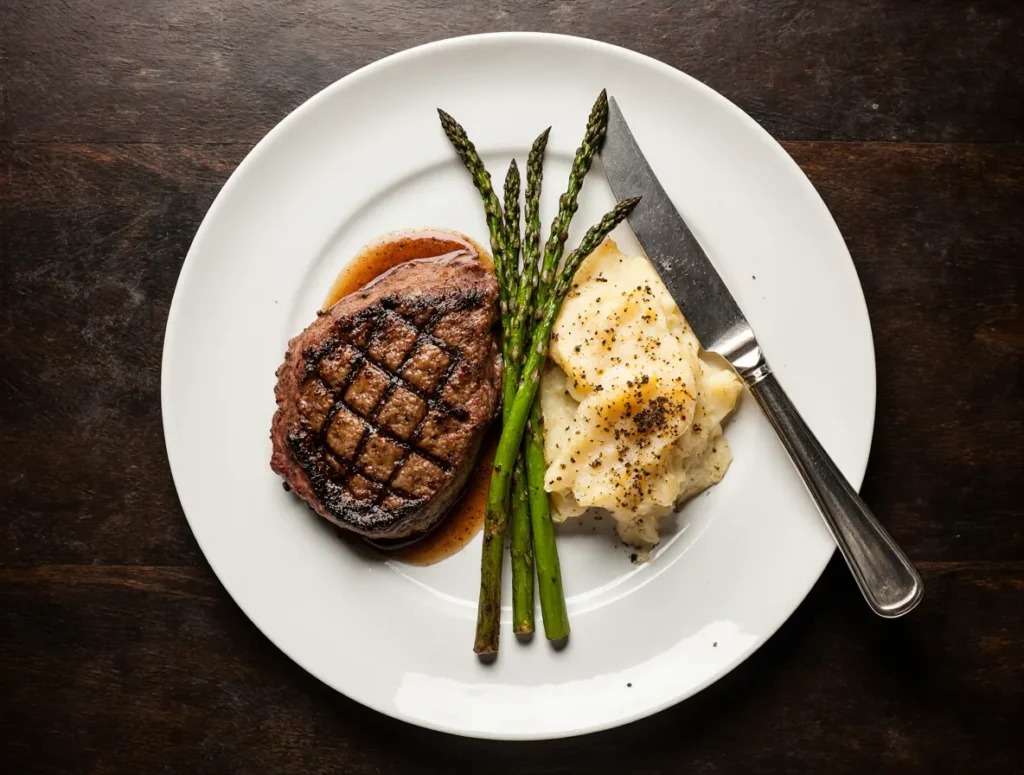
We have journeyed through history, anatomy, and culinary science to answer what is a delmonico steak. It is more than just a piece of meat; it is a symbol of quality and a testament to American culinary history.
Whether you choose a prime delmonico steak, a dry aged delmonico steak, or a standard choice cut, the secret lies in the technique. Remember that the delmonico steak cut requires high heat, patience, and simple seasoning to shine.
Now that you possess the ultimate delmonico steak recipe, it is time to head to the butcher. Do not be intimidated by the terminology. You now know exactly what is delmonico steak, how to cook delmonico steak, and how to prepare delmonico steak like a seasoned chef.
Fire up the grill or heat up the cast iron. The perfect delmonico steak dinner awaits.