The Best Lamb Ragu d’Abruzzo Recipe: A Perfect 6-Step Slow-Cooked Masterpiece
Table of Contents
Introduction
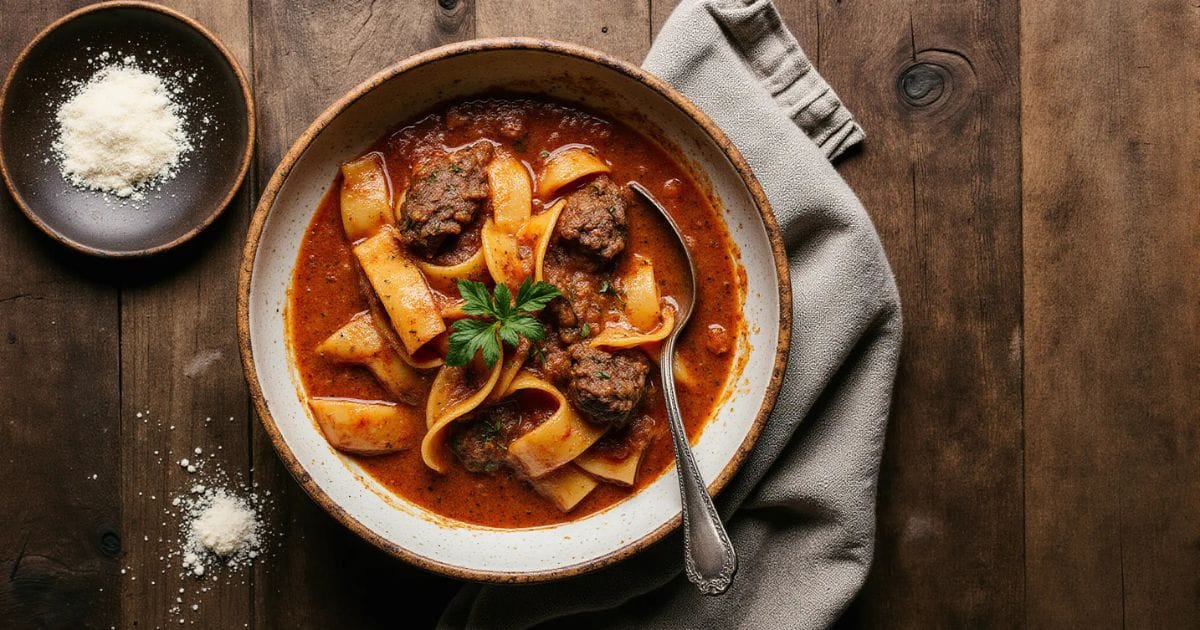
Discover the soul-satisfying magic of lamb ragu d’abruzzo, Abruzzo’s legendary braised lamb sugo. This is no quick sauce, but a slow-simmered masterpiece where tender lamb, rosemary, and red pepper create a symphony of rustic flavor. This guide is your passport to an authentic ragù agnello, walking you through a perfect 6-step method to craft this exquisite lamb ragu with red pepper in your own kitchen. We’ll unveil the secrets of the perfect lamb ragu d’abruzzo rose mary recipe, giving you the confidence to create an unforgettable sauce for pappardelle with braised lamb and master the art of slow cooking.
Why This Lamb Ragu d’Abruzzo Recipe is a Culinary Landmark
Before we gather our ingredients, it’s essential to understand what makes this particular lamb ragu d’abruzzo so special and distinct from other meat sauces.
- A Taste of Terroir and Tradition: The flavor profile of a true ragù agnello from Abruzzo is a direct reflection of its landscape. The region is famously “forte e gentile” (strong and gentle), with wild, mountainous terrain that influences its cuisine. This duality is present in the sauce: the strong, gamy flavor of lamb and the gentle, aromatic sweetness of slow-cooked tomatoes and wine. This recipe captures that essence, offering a genuine taste of Italian regional cooking that goes far beyond a standard Bolognese.
- The Unforgettable Flavor Trinity: The hallmark of an authentic lamb ragu with red pepper and rosemary is the holy trinity of flavors: the earthy, piney fragrance of fresh rosemary, the subtle, smoky heat of peperoncino (Italian dried red pepper), and the rich, distinctive taste of lamb. This combination is iconic and creates a sauce with incredible depth and complexity that beef-based ragus simply cannot replicate.
- The Alchemy of Slow Braising: This lamb ragu d’abruzzo rose mary recipe is a testament to the power of patience. Braising—browning the meat then simmering it slowly in liquid—transforms tough, inexpensive cuts of lamb into something fork-tender and luxuriously succulent. The long, gentle heat breaks down collagen into gelatin, which thickens the sauce naturally and gives it an unctuous, velvety mouthfeel that is the signature of a perfect braised lamb sugo.
- The Ultimate Comfort Food for Special Occasions: Making this lamb ragu d’abruzzo is an event. It’s a project that fills your home with an incredible aroma for hours, building anticipation for a meal that feels both celebratory and deeply nourishing. It is the perfect centerpiece for a Sunday family dinner or a meal designed to impress, especially when served over wide pasta like pappardelle with braised lamb.
The Soul of Abruzzo: Understanding the Origins of Ragù d’Agnello
To truly appreciate this dish, one must understand its roots. Abruzzo is a region of shepherds and mountains, and its cuisine is hearty, pragmatic, and flavorful.
- A Shepherd’s Dish: Historically, lamb was a staple protein for the shepherds who traversed the Apennine mountains. The practice of slow-cooking tougher cuts of meat in a single pot with available herbs and vegetables was born from necessity. This method tenderized the meat and created a hearty, sustaining meal. The specific combination of rosemary and peperoncino was a natural fit, as these plants thrived in the Abruzzese climate. This ragù agnello is, therefore, a direct link to the region’s pastoral heritage.
- Sugo, not Sauce: In Italy, a “sugo” is a sauce that is created by the cooking process itself—the juices from the meat, the wine, the tomatoes all melding together. It is not merely a topping but the heart of the dish. This braised lamb sugo is the star, and the pasta is its glorious vehicle.
- Contrasting with Other Ragus: Unlike the more famous Ragù alla Bolognese from Emilia-Romagna, which uses a mix of meats, milk, and is finely minced, the Abruzzese lamb ragu d’abruzzo is robust, distinctly lamb-forward, and features chunky pieces of meat. It is a bolder, wilder, and more aromatic cousin. For those familiar with other slow-cooked meats, the principle is similar to a classic beef stew, but the flavor profile is uniquely Mediterranean.
The Science of Braising: Unlocking Deep Flavor in Your Lamb Ragu
The magic of this lamb ragu with red pepper lies in the braising technique. Understanding the science behind it ensures a perfect result every time.
The Four Pillars of a Perfect Braise
- The Maillard Reaction (The Flavor Foundation): The first critical step is searing the lamb. This isn’t just for color; it’s for flavor. The Maillard reaction is a chemical process that occurs when proteins and sugars in the meat are exposed to high heat, creating hundreds of new flavor compounds. This reaction gives the braised lamb sugo its deep, savory, and complex base notes. Without a proper sear, your sauce will taste flat and boiled.
- The Holy Trinity of Aromatics (The Flavor Builders): After searing the meat, we sauté a soffritto of onion, carrot, and celery. This classic Italian base provides a sweet, aromatic foundation that supports the robust flavor of the lamb. In our lamb ragu d’abruzzo rose mary recipe, we then add the defining aromatics: rosemary and peperoncino, toasting them briefly in the oil to unlock their essential oils and maximize their fragrance.
- Deglazing (Capturing the Fond): After removing the meat and aromatics, the bottom of the pot will be covered with dark, crusty bits. This “fond” is pure flavor. Deglazing with a halal-friendly acidic liquid allows you to dissolve these prized bits back into the liquid, ensuring every bit of the Maillard reaction’s goodness is incorporated into your ragù agnello.
- Collagen to Gelatin (The Transformation): The chosen cut of lamb (like shoulder) is rich in collagen, a tough connective tissue. Through slow, moist cooking at a low temperature, collagen breaks down into soft, rich gelatin. This gelatin is what gives the sauce its luxurious, lip-smacking body and the meat its fall-apart tenderness. This is the heart of the braised lamb sugo.
Your Ultimate Shopping List: Sourcing Authentic Ingredients
The quality of your final lamb ragu d’abruzzo is directly proportional to the quality of your ingredients. Here is your detailed guide.
| Ingredient | Quantity & Specification | Why It’s Important |
|---|---|---|
| Lamb | 2-3 lbs (1-1.3 kg) boneless lamb shoulder | Shoulder is ideal for braising; it’s well-marbled with fat and collagen, which melts into the sauce. |
| Pancetta | 4 oz (115g), diced | Provides a savory, salty depth and foundational fat for cooking. |
| Aromatics | 1 large onion, 2 carrots, 2 celery stalks (all finely diced) | The classic soffritto base for building flavor. |
| Garlic | 4-5 cloves, thinly sliced | Adds a sweet, pungent backbone. |
| Fresh Rosemary | 2-3 large sprigs | The signature herb of this lamb ragu d’abruzzo rose mary recipe. Do not substitute dried. |
| Dried Red Pepper Flakes (Peperoncino) | 1 tsp, or to taste | Provides the characteristic subtle heat of a true lamb ragu with red pepper. |
| Tomato Paste | 2 tbsp | Concentrated umami that adds depth and color. |
| Red Wine Vinegar & Grape Juice | 1/2 cup red wine vinegar + 1/2 cup unsweetened grape juice | Provides the necessary acidity and fruity depth to replace wine, creating a complex base for the braised lamb sugo. |
| Canned Whole Plum Tomatoes | 1 (28 oz / 800g) can, hand-crushed | San Marzano tomatoes are preferred for their sweet flavor and low acidity. |
| Chicken or Beef Stock | 2 cups | Provides the liquid for braising. |
| Pappardelle Pasta | 1 lb (450g) for serving | The traditional, wide ribbon pasta is perfect for pappardelle with braised lamb. |
| Salt & Black Pepper | To taste | |
| Pecorino Romano Cheese | For serving | Salty, sharp, and traditional for grating over the finished dish. |
Essential Equipment
- A large, heavy-bottomed Dutch oven (essential for even heat distribution during the long braise).
- Tongs for turning the lamb.
- A wooden spoon for sautéing.
- A sharp chef’s knife.
The 6-Step Master Recipe: Crafting the Perfect Lamb Ragu d’Abruzzo
Follow these steps meticulously. This process is a ritual that builds layers of flavor, culminating in a spectacular braised lamb sugo.
Step 1: Prepare and Sear the Lamb

- Prep the Lamb: Pat the lamb shoulder completely dry with paper towels. This is crucial for achieving a good sear. Cut the lamb into 2-inch chunks, trimming away large pieces of hard fat. Season generously with salt and pepper on all sides.
- Render the Pancetta: In your Dutch oven over medium heat, cook the diced pancetta until it has rendered its fat and become crispy. Remove the pancetta with a slotted spoon, leaving the fat in the pot.
- The Sear: Increase the heat to medium-high. Working in batches to avoid overcrowding, sear the lamb chunks in the hot pancetta fat. Do not move them for a few minutes, allowing a deep brown crust to form on one side before turning. This should take about 5-7 minutes per batch. Remove the lamb and set it aside with the pancetta.
Step 2: Build the Flavor Base (The Soffritto)
- In the same pot with the rendered fat, add the diced onion, carrot, and celery. Add a pinch of salt to help them release their moisture. Cook for 8-10 minutes, stirring occasionally, until the vegetables have softened and become fragrant.
- Add the sliced garlic, the fresh rosemary sprigs (whole, they will be removed later), and the peperoncino (red pepper flakes). Stir constantly for 60 seconds until the garlic and spices are incredibly fragrant. This toasts the spices, unlocking the essential flavor of your lamb ragu with red pepper.
- Push the vegetables to the side and add the tomato paste to the center of the pot. Let it cook for 1-2 minutes, stirring, until it darkens slightly. This “toasting” of the tomato paste deepens its flavor and removes any tinny taste.
Step 3: Deglaze with a Halal-Friendly Acidic Base
- Instead of wine, we will use a combination of red wine vinegar and unsweetened grape juice. Pour the 1/2 cup of red wine vinegar and 1/2 cup of grape juice into the pot. It will sizzle and steam dramatically. Use your wooden spoon to scrape all the browned, flavorful bits (the fond) from the bottom of the pot. This is a critical step for building a complex ragù agnello.
- Let the liquid simmer and reduce by about half, which will take 3-4 minutes. This cooks off the sharp edge of the vinegar and allows the grape juice to caramelize slightly, leaving behind a balanced acidity and subtle fruitiness that beautifully mimics the function of wine in the lamb ragu with red pepper.
Step 4: The Slow Braise

- Combine and Simmer: Return the seared lamb and pancetta to the pot. Add the hand-crushed tomatoes and the stock. Stir everything together and bring to a very gentle simmer. You should see only occasional small bubbles breaking the surface.
- Low and Slow: Partially cover the pot with a lid and reduce the heat to the lowest possible setting. Let the lamb ragu d’abruzzo braise gently for 2.5 to 3 hours. Stir occasionally to prevent sticking. The sauce is done when the lamb is fork-tender and easily shreds, and the sauce has thickened considerably.
Step 5: Finish the Sauce
- Remove Herb Stems: Fish out and discard the now-bare rosemary stems.
- Shred the Meat: Using two forks, shred the large chunks of lamb directly in the pot. Some smaller pieces can remain intact for texture. This integration of the meat is what turns a stew into a proper braised lamb sugo.
- Adjust Consistency: If the sauce seems too thin, increase the heat and let it simmer uncovered for 10-15 minutes to reduce further. If it seems too thick, add a splash of water or stock. Taste and adjust seasoning with salt and pepper.
Step 6: Serve with Pappardelle
- Cook the Pasta: While the ragu is in its final stages, bring a large pot of heavily salted water to a boil. Cook the pappardelle until al dente.
- The Final Union: Just before the pasta is done, ladle about a cup of the finished lamb ragu d’abruzzo into the large, empty pasta serving bowl. Using tongs, transfer the al dente pappardelle directly from the pot into the serving bowl. Add another few ladles of ragu on top.
- Toss and Emulsify: Toss the pasta vigorously with the sauce. The starch from the pappardelle will help the sauce cling to every ribbon, creating the perfect pappardelle with braised lamb. Add a splash of pasta water if needed to make the sauce silky and cohesive.
- Serve Immediately: Divide the pasta among warm bowls, topping each with an additional spoonful of ragu. Finish with a generous grating of Pecorino Romano cheese.
Expert Tips and Troubleshooting for the Perfect Ragù
- My Ragu is Too Acidic: The primary culprit is often the tomatoes. Using high-quality San Marzano tomatoes can help. If it’s still acidic, a pinch of sugar or a grated carrot can help balance the pH. The long cooking time should also mellow the acidity.
- The Sauce is Too Thin: This usually means it needs more reduction. Simply simmer it uncovered until it reaches your desired consistency. Remember, it will thicken further when tossed with the starchy pasta.
- The Sauce is Too Thick: Easy to fix! Just add a bit of your reserved pasta cooking water, stock, or even a little hot water to thin it to the perfect sauciness.
- Can I Make it Ahead? Absolutely! In fact, like many braised dishes, this lamb ragu d’abruzzo often tastes even better the next day after the flavors have had more time to meld. Let it cool completely and store it in an airtight container in the refrigerator for up to 3 days, or freeze for up to 3 months.
- Alternative Cuts of Lamb: While shoulder is ideal, you can also use lamb neck or leg for this ragù agnello. Just be aware that leg is leaner and may not become quite as fall-apart tender.
The Perfect Non-Alcoholic Accompaniment
A dish this robust deserves a sophisticated drink pairing. Instead of wine, consider serving this lamb ragu d’abruzzo with a pomegranate and rosemary spritzer. The tartness of the pomegranate and the herbal note of rosemary beautifully echo the flavors in the ragu without the need for alcohol. Alternatively, a robust, non-alcoholic grape juice or a sparkling blood orange beverage would also complement the rich, savory notes of this braised lamb sugo exquisitely.
Nutritional Information & Dietary Notes
| Nutrient | Approximate Value per Serving (with Pasta) |
|---|---|
| Calories | 650 – 750 |
| Fat | 22g |
| Carbohydrates | 70g |
| Protein | 42g |
| Fiber | 6g |
- Gluten-Free: This braised lamb sugo is naturally gluten-free. Simply serve it over your favorite gluten-free pasta, polenta, or mashed potatoes.
- Dairy-Free: The sauce itself is dairy-free. Simply omit the Pecorino cheese at the end for serving.
Conclusion: A Taste of Abruzzo in Your Home

You have now journeyed through the entire process of creating the ultimate lamb ragu d’abruzzo. From the initial sear that builds the flavor foundation to the patient, slow braise that transforms tough meat into a tender delicacy, you have mastered a recipe that is more than a meal—it is an experience. This lamb ragu d’abruzzo rose mary recipe connects you to the traditions of Italian shepherds and the rugged beauty of the Abruzzo landscape.
This ragù agnello is a celebration of patience and quality ingredients. It’s a dish that rewards the cook not just with a delicious dinner, but with the profound satisfaction of creating something truly special. So, boil the water for your pappardelle with braised lamb, and gather your loved ones. You are about to serve a masterpiece.
Have you ever tried a regional Italian ragu? Will you be making this Lamb Ragu d’Abruzzo? Share your thoughts and experiences in the comments below!