The Perfect Coulotte Steak Guide: 7 Steps to Mastering the Sirloin Cap
Table of Contents
Introduction
If you consider yourself a connoisseur of fine beef, you’ve likely explored the common cuts: the deeply marbled Ribeye, the elegant Filet Mignon, and the balanced New York Strip. Yet, there remains an unsung hero in the butcher’s case that offers a phenomenal blend of intense flavor, satisfying chew, and excellent value. This cut is the coulotte steak.
Often overlooked, the sirloin cap is quickly transitioning from a butcher’s secret to a culinary centerpiece. Known globally by its Brazilian name, Picanha, this triangular piece of meat provides a unique eating experience due to its essential fat cap. It is the kind of meat that will elevate your backyard barbecue from great to legendary.
In this ultimate, comprehensive guide, we will explore the cut’s origins, delve into the critical science of its preparation, and outline the absolute best methods for cooking it to absolute perfection. Whether you are aiming for a classic presentation or attempting coulotte steak frites, this detailed resource contains everything you need to transform a humble piece of beef coulotte into a spectacular meal.
Part 1: Defining the Delicacy: What is Coulotte Steak?
To truly appreciate this protein, we must begin with precise anatomy and nomenclature. When asking what is coulotte steak, you are referring to the boneless steak cut from the top portion of the sirloin cap. It is a specific muscle known scientifically as the biceps femoris. This triangular muscle sits directly atop the top sirloin primal cut. In professional butchery, this region is occasionally referred to as the spinalis of the sirloin—a description that highlights its superior flavor profile.
The intensity of the flavor is directly linked to the muscle’s function. As a moderately working muscle, it develops a deep, robust, and characteristically beefy taste. However, unlike other working muscles that can be tough, this cap is protected and lubricated by a thick, natural layer of fat. This fat cap is key; it serves as a built-in self-basting mechanism, ensuring the interior remains moist as the exterior crisps.
Naming Conventions and Cut Variations

The cultural names for this piece of meat are numerous, reflecting its global popularity. When you inquire what is a coulotte steak, a butcher might use one of several terms:
- Picanha: The dominant term in Brazil and Latin America. It usually refers to the whole, untrimmed muscle, often prepared on large skewers.
- Rump Cap: A common term used in the UK and Australia.
- Sirloin Cap: The most descriptive American term.
The distinction between Picanha and the coulotte steak cut lies primarily in the presentation. Picanha is typically roasted whole or cut into thick, circular portions specifically for rotisserie. Conversely, the coulotte steaks are pre-portioned into individual, ready-to-grill steaks, usually with the fat layer trimmed slightly to promote quicker rendering in a pan or over direct heat.
A crucial characteristic of the steak coulotte is its lean core wrapped in flavor-rich fat. This blend provides a complexity that is often missing from cuts like the Tenderloin. When sourcing this meat, opting for a prime coulotte will guarantee a higher degree of intramuscular fat (marbling), leading to an even richer, more tender final product.
The final element to master is coulotte steak pronunciation, which is typically “Koo-Lot,” derived from the French term for “cap” or “headgear.” Mastering the pronunciation is the first step in ordering like a true expert.
Part 2: Sourcing Perfection: Where to Buy Coulotte Steak
Successfully preparing this cut begins long before the cooking process—it starts at the point of purchase. Knowing where to buy coulotte steak ensures you start with quality product, which is the foundation of any great meal.
The Butcher Counter: Your Best Source
For the highest quality, a local, reputable butcher is your best resource. Do not hesitate to ask specifically for the top sirloin cap. If they have the primal cut, they can easily separate the cap for you. When ordering, ask for the coulotte steak cut to be approximately 1.5 inches thick. This thickness is absolutely non-negotiable for achieving a flawless crust and a perfect medium-rare interior.
If the butcher carries different grades, always seek out prime coulotte. The superior marbling in this grade ensures maximum flavor and tenderness. Even if you choose “Choice,” the cut remains outstanding, but the marbling of the Prime grade elevates the dining experience significantly.
Buying Strategy in Supermarkets
In conventional grocery stores, this cut may be mislabeled or packaged differently. Look for labels reading “Sirloin Cap Steaks,” “Top Sirloin Cap,” or sometimes simply “Picanha.” If the cut is not readily visible, asking a meat department employee for the sirloin coulotte will often lead them to find it in the back, as it is a cut frequently sold to restaurants but less often displayed pre-cut for the general public.
Understanding Grading and Feed
When purchasing coulotte steaks, consider the difference between grain-fed and grass-fed. Grain-fed options typically have greater marbling and a milder, sweeter flavor profile, making them the standard choice for most steakhouses. Grass-fed options, while often leaner, possess a deeper, more mineral-rich taste.
Part 3: Preparation and Tempering: The Pre-Cook Ritual
The preparation of any steak is just as important as the cooking itself. For cooking coulotte steak, two steps are critical: scoring and tempering.
The Essential Fat Cap Score
The sirloin coulotte steak has a thick, triangular fat cap. This fat layer, when exposed to high heat, contracts much faster than the muscle fibers underneath. This tension causes the entire steak to curl, preventing full contact with the cooking surface and resulting in an uneven sear.
To counteract this:
- Use a razor-sharp knife to score the fat cap in a cross-hatch pattern.
- The cuts should only penetrate the fat, not the underlying red muscle.
- This scoring allows the fat to release tension and render more efficiently, resulting in a beautifully crispy, flat crust.
Dry Brining for Depth of Flavor
The key to achieving a deeply flavored beef coulotte is the dry brine. This process draws out moisture, which is essential for a great sear, and then draws the salt back into the meat, seasoning it from within.
- Pat the steak completely dry with paper towels.
- Liberally coat the surface with coarse salt.
- Place the sirloin coulotte on a wire rack in the refrigerator for 4 to 24 hours. The rack ensures air circulation, drying the exterior and setting the stage for an incredible crust.
Part 4: Mastering the Flame: How to Cook Coulotte Steak
There are several methods for delivering a perfectly cooked coulotte steak, but they all rely on high heat to create a crusty exterior while managing the delicate interior temperature.
Method A: Grilling for Maximum Flavor

The grill is arguably the best environment for this cut, as the dripping fat creates smoke that bastes the meat. The process of grilling coulotte steak requires a two-zone fire setup: one side for high, direct heat (the sear zone) and one side for low, indirect heat (the finishing zone).
- Preparation: Season the beef coulotte with coarse pepper and a minimal amount of oil just before placing it on the grill.
- Fat Rendering: Place the steak fat-side down on the high-heat side first. Let the fat sizzle and render for 3-4 minutes.
- Searing: Once the fat is deeply colored and crisp, sear the remaining sides for 2 minutes each.
- Finishing: Move the steak to the indirect side, close the lid, and let it cook gently until the internal temperature reaches 130°F.
- Resting: Allow the grilled coulotte steak to rest for 10 minutes.
Method B: The Pan-Sear for Steak Frites

For those aiming for a bistro-style meal, pan-searing on a cast-iron skillet is the ideal preparation. This method is the foundation for a delicious plate of coulotte steak frites.
- Render: Heat your pan to high. Place the steak coulotte fat-side down and render for 3-4 minutes until golden and crisp.
- Sear: Sear the flat sides for 2-3 minutes each, building a dark crust.
- Basting: Reduce the heat. Add butter, garlic, and fresh herbs (thyme or rosemary) to the pan. Baste the meat continuously as it finishes cooking.
- Completion: Remove the steak when it hits 130°F.
Method C: Precision Sous Vide
If consistency is your goal, sous vide is the answer to how to cook coulotte steak flawlessly.
- Vacuum-seal the steak with aromatics.
- Cook at $131^{\circ} \mathrm{F}$ for 2-3 hours.
- Remove, pat dry, and finish with a 60-second sear in a screaming-hot pan or a high-powered kitchen torch.
The question of how to cook a coulotte steak perfectly is answered by understanding that the cooking time will be short—only about 10-12 minutes total for a medium-rare finish on a 1.5-inch cut.
Part 5: The Global Context: Comparison and Cuisine
The versatility of this cut is evident in its global appeal. When discussing coulotte steak vs picanha, remember you are comparing preparation methods more than different muscles. Picanha is often prepared with only rock salt, letting the meat’s natural flavor dominate, a philosophy perfectly suited to the richness of the sirloin cap.
Serving Ideas
The robust nature of the beef coulotte steak pairs well with strong flavors and rich sides.
- Brazilian Style: Serve thinly sliced with a sprinkle of sea salt and a side of farofa (toasted manioc flour).
- Steak Frites: Pair with thin, crispy French fries and a simple herb butter or mustard.
- Sauces: Chimichurri (parsley, garlic, vinegar, oil) is a classic partner because its acidity cuts through the richness of the rendered fat.
For those planning a full menu, balancing the richness of the meat with a lighter side can be achieved with various protein options. If you need inspiration for complementary side dishes or alternative proteins, exploring a site like My Chicken Recipes can provide excellent culinary direction.
Part 6: Detailed Recipe: Pan-Seared Perfection

Here is a specific, focused coulotte steak recipe for success tonight.
Pan-Seared Sirloin Cap with Garlic Butter
Ingredients:
- 2 (1.5-inch thick) Coulotte steaks
- Kosher salt and coarse black pepper
- 2 tbsp high-heat oil (Avocado or Grapeseed)
- 3 tbsp butter
- 2 cloves garlic, smashed
- Thyme or rosemary sprigs
Instructions:
- Preparation: Score the fat caps. Season the steak coulotte liberally with salt and pepper.
- Heat: Heat a cast iron skillet over high heat until it just begins to smoke.
- Render: Place the steaks fat-side down and reduce the heat to medium-high. Render the fat for 4 minutes until crisp.
- Sear: Sear the remaining sides for 2 minutes each.
- Baste: Reduce the heat to medium-low. Add the butter, garlic, and herbs. Tilt the pan and spoon the foaming butter over the meat for the final 2 minutes.
- Temp Check: Check the internal temperature, aiming for $130^{\circ} \mathrm{F}$.
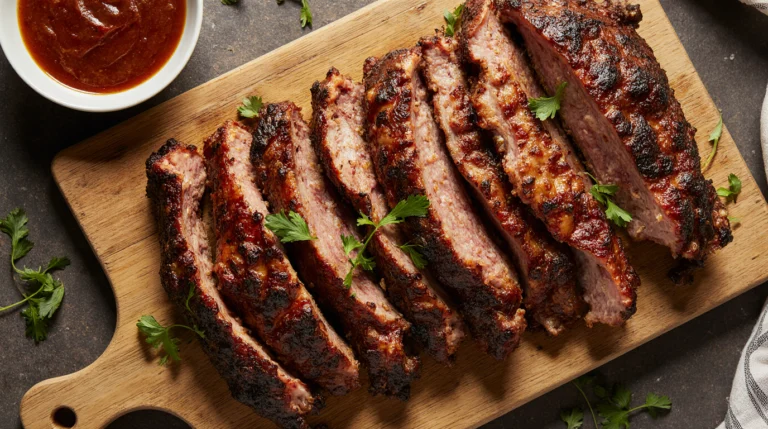
- Rest & Slice: Rest the steak for 10 minutes before slicing against the grain.
Part 7: Final Thoughts and FAQs
Frequently Asked Questions
- Is it tender? Yes, coulotte steak is quite tender, provided it is sliced correctly and not overcooked. It has a satisfying texture that is less buttery than a Filet but more tender than a standard top sirloin.
- Can I freeze it? Yes, this cut freezes well. Ensure it is vacuum-sealed or wrapped tightly to prevent freezer burn.
- Do I need to marinate? No, the sirloin coulotte steak has excellent natural flavor. A dry brine is superior to a wet marinade.
- What about the plural? When referring to more than one, simply use the plural: coulotte steaks.
- Is it economical? Yes, it is a high-value cut, offering premium taste without the premium price of a Tenderloin.
Understanding the unique characteristics of this cut is the first step toward cooking spectacular beef at home. From learning what is coulotte steak to mastering the perfect sear, you are now equipped with the knowledge to bring this spectacular cut to your table.
Now, go forth, find your perfect coulotte steak, and enjoy the results of your labor!