The Perfect 7-Step Guide to Baking the Best Windmill Cookies (Speculoos) at Home
Table of Contents
Introduction: Unveiling the Magic of Speculoos
Few biscuits evoke the cozy, spicy warmth of the holidays and European tradition quite like windmill cookies. Known across the world by various names, these perfectly spiced, crunchy treats are a staple in Dutch, Belgian, and German bakeries. If you’ve ever wondered about the difference between a speculoos and a speculaas, or the history behind the iconic almond windmill cookies, you’re in the right place. This comprehensive guide will take you on a delicious journey through the origins, key ingredients, and the best techniques to master the authentic windmill cookies recipe right in your own kitchen. Forget the store-bought crunch of Biscoff or the classic look of Archway Windmill Cookies—we’re aiming for a homemade masterpiece.
The windmill cookies we adore today are descendants of the rich tradition of speculaas, a heritage deeply rooted in celebration. Historically, these cookies were intricately pressed into wooden molds, often depicting Saint Nicholas, windmills, or other festive scenes, making them much more than just a sweet treat; they were edible art.
In this ultimate guide, we will dive deep into:
- The fascinating history: What is speculoos?
- The secret behind the perfect spice blend that defines a true speculaas.
- Step-by-step instructions for crafting the best homemade windmill cookies.
Get ready to preheat your oven and prepare for the enticing aroma of cinnamon, cloves, and nutmeg. By the end of this journey, you’ll not only have a batch of perfect windmill cookies but also a complete understanding of why these dutch cookies have captured hearts for centuries.
1. The Origin Story: Windmill Cookies, Speculoos, and Speculaas

The history of the windmill cookies is as rich and aromatic as the spice blend that gives them their unique flavor. While most people instantly recognize the term Biscoff (short for biscuit/cookie off coffee), the tradition goes back much further than the Biscoff Lotus Cookie brand. The fundamental cookie is known as speculoos in Belgium and France and speculaas in the Netherlands. In Germany, a similar but often richer version is called Spekulatius.
What is Speculoos? Tracing the Roots of the Spiced Cookie
The word speculoos (and speculaas) is generally believed to have roots in the Latin word speculum, meaning ‘mirror’ or ‘image,’ referring to the wooden molds used to stamp the dough into decorative scenes. Another theory links it to speculator, a term for a bishop or overseer—a nod to the cookies’ traditional association with Saint Nicholas Day (Sinterklaas).
Historically, the availability of the exotic spices needed—cinnamon, cloves, nutmeg, ginger, and cardamom—was once a luxury, making speculaas a seasonal treat, primarily baked and enjoyed around December 5th and 6th in the Netherlands and Belgium, respectively. The intricate designs, like the windmill cookie shape, were baked to celebrate this festive time.
These original spiced biscuits were truly a reflection of the Dutch Golden Age, a time when the Dutch East India Company had a near-monopoly on the spice trade, making spices more affordable in Holland than in surrounding regions. This access to premium ingredients allowed the dutch cookies to become an integral part of the local culinary identity. Even today, when you bite into a freshly baked speculoos cookie, you are tasting a piece of history—a blend of tradition and the global spice trade.
The key difference between a speculoos and a speculaas often comes down to regional ingredients and preparation. In the Netherlands, speculaas typically contains a higher amount of specific speculaas spice (primarily cinnamon and cloves) and often uses ammonia carbonate as a leavening agent for an extra-crisp texture. Belgian speculoos, while equally delicious, tends to be less heavily spiced and more caramelized. Regardless of the subtle difference, both are celebrated for their distinctive crunch and caramelized flavor. Steenstra’s Royal Dutch Bakery and Voortman Windmill Cookies are well-known examples of the commercial popularity of these treats.
Interested in pairing your cookies with a homemade chicken dish? Check out some great ideas over at my chicken recipes.
Regional Differences: Speculaas vs. Spekulatius
While the windmill cookies are most closely associated with the Low Countries (Netherlands and Belgium), their spiced biscuit cousins exist across the border in Germany.
- Spekulatius: German Spekulatius is usually made with ground almonds, giving them a more substantial, almost shortbread-like texture compared to the ultra-crisp speculaas. The German versions often feature designs related to Christmas or Biblical scenes and are baked throughout the Advent season, making them a popular form of Dutch Christmas Cookies in the region.
The famous almond windmill cookies enjoyed worldwide often bridge this gap, incorporating a generous amount of ground almonds or even whole sliced almonds on top to provide a nutty counterpoint to the powerful spice blend. If you are a fan of the Trader Joe’s almond cookies, you are enjoying a cookie that draws heavily from this German/Dutch intersection. Ultimately, no matter if you call them speculoos, speculaas, or Spekulatius cookies, the love for this caramelized biscuit remains universal.
2. The Spice Blend: The Heart and Soul of Authentic Speculoos
The soul of a perfect batch of windmill cookies is undeniably the spice blend. It’s what differentiates a true speculoos from any other kind of shortbread or ginger snap. The spices should be warm, pungent, and perfectly balanced, leaning heavily on cinnamon and cloves to create that classic, intoxicating aroma.
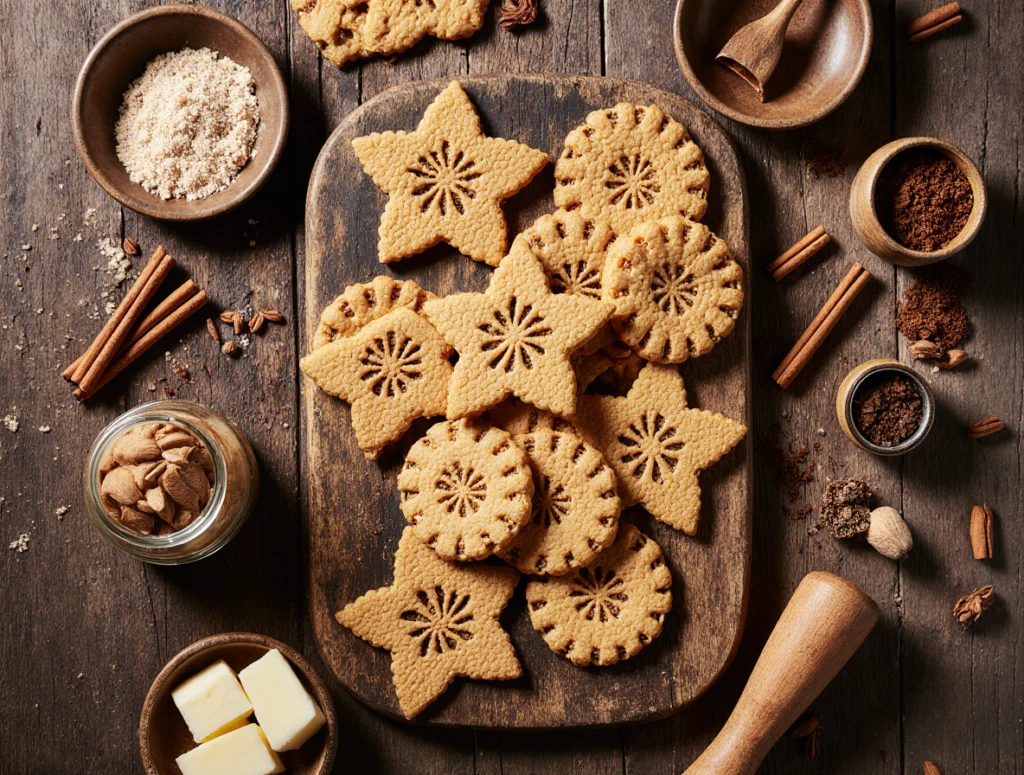
The Essential Spices: Cinnamon, Cloves, and More
The traditional speculaas spice mix, or speculaaskruiden, is an artisanal blend that can vary from baker to baker. The foundation, however, almost always includes:
- Cinnamon: The dominant flavor. It should be high-quality, preferably Ceylon cinnamon for a lighter, more complex note, though cassia is also often used.
- Cloves: Providing a deep, warming pungency that is the second most important spice.
- Nutmeg: Adding a hint of earthiness and sweetness.
- Ginger and Cardamom: Used in smaller amounts to brighten and round out the flavor profile.
- White Pepper (Optional but Recommended): A subtle, almost undetectable inclusion that adds a touch of warmth and enhances the overall spice profile.
The exact ratio is a highly guarded secret in many bakeries, but a good starting point for a homemade blend involves a base of cinnamon, with cloves making up about one-third of the cinnamon amount, and the remaining spices (nutmeg, ginger, cardamom, pepper) making up a small fraction of the total. This blend is what answers the question: What is in speculoos? It is the concentrated essence of a holiday kitchen.
The preparation of speculoos is an exercise in aromatic alchemy. Unlike some modern cookies that rely heavily on vanilla, the flavor of windmill cookies comes entirely from this meticulously balanced spice mix and the butter. When you smell these cookies from Holland baking, the air is filled with the scent of a hundred years of tradition.
Achieving the Caramelized Flavor: Brown Sugar and Molasses
What truly makes a speculoos cookie a speculoos is the deep, rich, caramelized flavor. This is achieved through the sugar component, which traditionally features dark brown sugar, molasses, or basterdsuiker (a moist Dutch sugar).
- Dark Brown Sugar: Using a dark brown sugar (muscovado is excellent) introduces a level of molasses that white sugar simply can’t provide. As the cookie bakes, this sugar caramelizes, creating the signature caramelized biscuit cookies taste that has made the Lotus biscuit (Biscoff) famous worldwide.
- Molasses/Treacle: For an even deeper color and flavor, a small amount of dark molasses or golden syrup is often included in the speculoos recipe. This liquid sweetener ensures the dough remains moist enough to hold its shape during the pressing process and contributes significantly to the final, addictive snap.
This combination of intense, freshly ground spices and caramelized sugar gives windmill cookies their unique complexity. The taste is sweet, spicy, and deeply satisfying—far removed from simple butter cookies. This is what truly defines a windmill cookie recipe and explains why so many people ask, “What flavor is Biscoff?” The answer is simple: the taste of caramelized brown sugar mixed with the classic speculaas spice blend.
3. Mastering the Speculoos Dough: The Key to Crunch
Creating the perfect dough is the most crucial step in making exceptional windmill cookies. The goal is a dough that is firm enough to take a sharp, clean impression from a cutter or mold but also rich enough to bake up into a crisp, buttery biscuit that doesn’t crumble too easily. The speculaas recipe is a straightforward one, but requires patience and attention to detail.
Ingredient Quality Matters (e.g., Butter and Almonds)
To achieve the best speculoos flavor, using high-quality ingredients is non-negotiable.
- Butter: Use unsalted butter that is rich in flavor. European-style butter, with a higher fat content, will give you a better taste and texture for your windmill cookies dutch. The fat is the primary vehicle for the spice blend, carrying the aroma throughout the dough.
- Flour: All-purpose flour is suitable, but ensure it’s accurately measured. Too much flour will result in dry, tough speculaas cookies.
- Almonds: If you are making almond windmill cookies, use finely ground, blanched almonds. This gives the cookie a delicate crumb without compromising the snap. Steenstra’s Almond Windmill Cookies are famous for this exact inclusion.
When mixing the dough, the process is similar to making shortbread: cream the butter and sugar thoroughly, then gradually incorporate the flour and spices. The key is to mix only until the ingredients are just combined—over-mixing develops gluten, which will make your windmill cookies tough instead of delicately crisp.
The Importance of Resting the Dough
One of the most essential, yet often overlooked, steps in any speculoos recipe is resting the dough. Once the dough for the windmill cookies is mixed, it must be chilled, preferably overnight, but for at least 6-8 hours.
Why the long chill?
- Hydration: It allows the flour to fully hydrate with the liquid from the butter, egg (if used), and molasses.
- Flavor Development: More importantly, it allows the spice blend to fully infuse the butter and the rest of the dough. The difference in flavor between a cookie made with dough chilled for two hours and one chilled for 12 hours is substantial. The longer rest allows the spices to “bloom,” resulting in a much more complex and powerful flavor profile that defines a true speculoos cookie.
- Structure: Chilling solidifies the butter, making the dough much easier to roll out thinly and press without sticking. This is critical for getting the crisp texture and the sharp, defined edges of the classic windmill cookie.
To make it easier to roll later, shape the dough into a thick, flat rectangle or disk before wrapping and chilling. This minimizes the amount of time you have to work with the cold dough later.
4. Shaping Your Windmill Cookies: Tools and Techniques
The visual appeal of windmill cookies is almost as famous as their taste. The iconic image of the windmill is what gives the cookie its common name in English, distinguishing it from the broader term speculaas. Achieving this beautiful pattern requires specific tools and a careful technique.
Using a Windmill Cookie Cutter
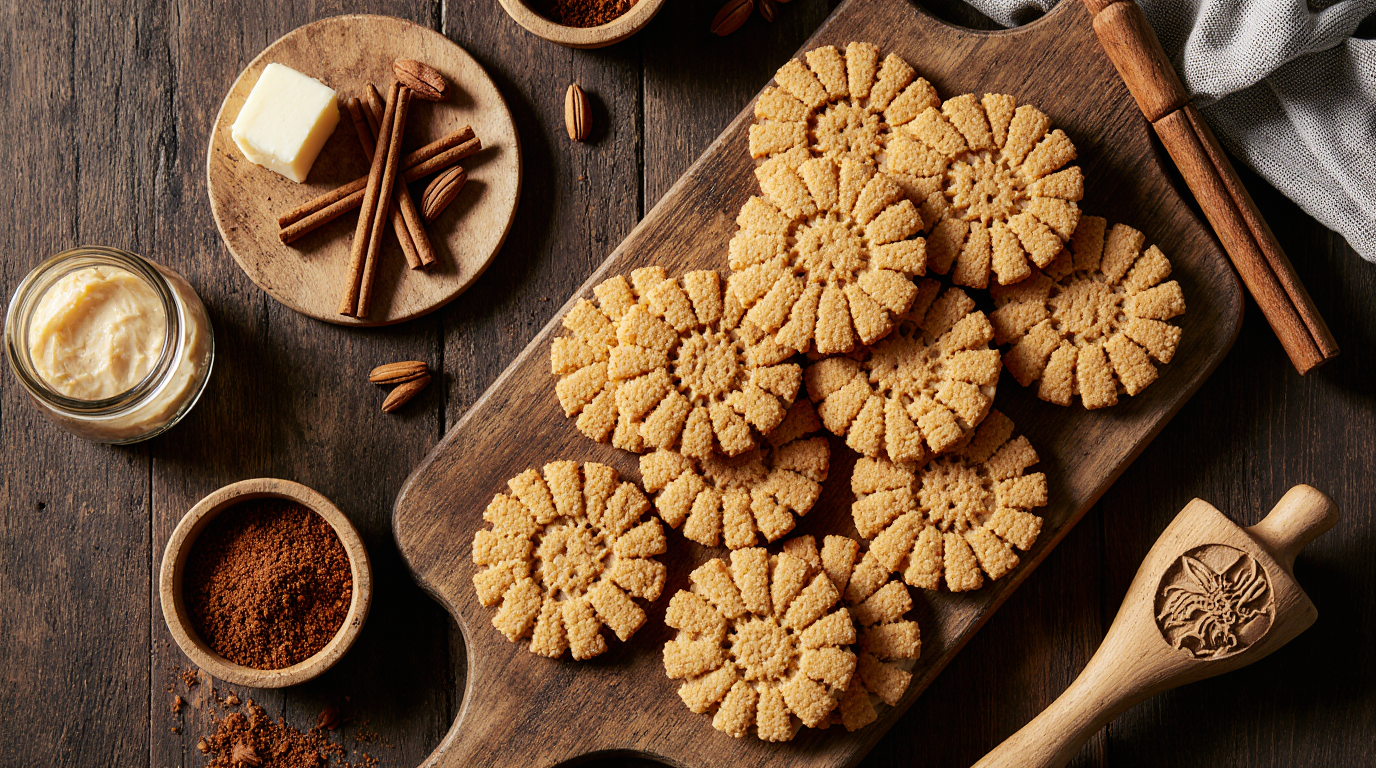
For the home baker, the easiest way to make recognizable windmill cookies is by using a specialized metal cutter. These cutters usually have a distinct, multi-bladed windmill shape and often include a stamp mechanism to press the details onto the dough surface.
- Rolling Thin: The dough must be rolled very thinly—ideally between 2 and 3 millimeters (about 1/8 inch). The thinner the dough, the crisper the final speculoos will be. Rolling on a lightly floured surface or, even better, between two sheets of parchment paper, prevents sticking and allows you to transfer the cut shapes easily.
- The Cut and Press: Once rolled, use the cutter to cut the shapes. If your cutter includes a stamp, press it firmly but gently to ensure the details of the windmill are deeply impressed into the dough. This detail is what makes a Dutch Windmill Cookie truly unique and beautiful.
The Classic Impression (Molds vs. Cutters)
Traditionally, speculaas cookies were made using wooden molds. These carved, intricate planks of wood are the original tool for shaping these cookies.
- Using Molds: If you are using a wooden mold (often called a speculaasplank), the process is slightly different. The mold is dusted with flour (or brushed with a tiny amount of oil), and the dough is pressed into the cavity. The excess dough is scraped away, and the piece is then carefully tapped or lifted out. This technique results in a three-dimensional cookie, typically much larger and thicker than a standard cutout speculoos.
- The Cookie’s Name: The original windmill cookies made in Holland would have been made using these methods, often featuring windmills, St. Nicholas, farmers, and animals.
Whether you use a simple metal windmill cookie cutter or a traditional mold, the goal is the same: to create a cookie that is visually stunning. This attention to detail is part of the charm of making cookies from Holland.
5. Baking to Perfection: Achieving the Signature Crunch
Baking windmill cookies correctly is the final, critical step in achieving the desired speculoos texture: a crisp, clean snap that melts in your mouth. This requires precise temperature control and attentive timing. The goal is to maximize caramelization without burning the delicate spice blend.

Temperature and Time: The Golden Ratio
The best way to bake speculaas is to use a slightly lower oven temperature for a longer time, which promotes the deep caramelization of the brown sugar without scorching the thin dough.
- Temperature: Preheat your oven to around $160-170^\circ\text{C}$ ($320-340^\circ\text{F}$).
- Time: Bake for approximately 12 to 18 minutes, depending on the thickness of your dough.
- The Window: Watch the cookies closely, especially near the end of the baking time. They should turn a deep, golden-brown color. The edges will be the first to deepen in color. A pale cookie means you haven’t activated the caramelization, and it will be softer than a true speculoos should be. A cookie that is too dark will taste bitter.
Tips for Even Baking and Cooling
- Rotate the Trays: If you are baking multiple trays of windmill cookies at once, rotate their position halfway through the baking time. This compensates for hot spots in your oven and ensures a uniform color and crispness across all your speculas.
- No Dough Scraps: When re-rolling scraps of dough, combine them quickly and re-chill for 10-15 minutes. Overworking the dough will activate the gluten, leading to tougher cookies.
- Cooling: This is crucial for the snap! As soon as the windmill cookies come out of the oven, slide the parchment paper (with the cookies) onto a wire cooling rack. The cookies must cool completely on the rack. The remaining heat will continue to dry them out, making them extra crisp. Do not stack or store them until they are fully cooled to room temperature, or they will steam and lose their delicate crunch.
The resulting biscuit should be hard, thin, and brittle—a perfect speculaas biscuit recipe yield.
6. Serving and Storing Your Homemade Windmill Cookies
Once you have mastered the art of baking your own batch of windmill cookies, the next step is enjoying and preserving them. Their deep, caramelized spice flavor makes them incredibly versatile.
Creative Serving Ideas (Including Speculoos Cream)
While a fresh speculoos cookie is perfect on its own, especially with a cup of coffee (or a windmill coffee!), their flavor profile lends itself to creative desserts:
- The Crumble Base: The crisp, spiced cookie makes an excellent crust for cheesecakes, tarts, and ice cream pies. The flavor is a fantastic alternative to a graham cracker crust.
- The Dip: For a true treat, try making a homemade speculoos cream (or “cookie butter”). This is made by crushing the speculoos cookies and blending them with a fat (like vegetable oil or butter) and a little extra spice until it forms a smooth, spreadable consistency.
- Garnish: Use crushed windmill cookies with almonds as a topping for yogurt, oatmeal, or even a classic French crème brûlée.
For those familiar with galletas lotus (the Spanish term for Lotus Biscoff), you know how versatile this caramelized biscuit is. Your homemade speculoos is an elevated, spicier version perfect for any pairing.
How to Keep Your Dutch Cookies Fresh
One of the great qualities of a thin, crispy speculoos is its longevity, provided it is stored correctly.
- Airtight Container: Always store your dutch cookies in a truly airtight container at room temperature. A tin or a metal cookie jar is ideal.
- Avoid Moisture: Never store them near anything that releases moisture (like fresh bread or soft cakes). Moisture is the enemy of the crispness.
- Freezing Dough: The unbaked speculoos dough freezes beautifully. Simply wrap the disk of dough tightly and place it in a freezer bag. Thaw overnight in the refrigerator before rolling and cutting.
This longevity is another reason these cookies became so popular. They were perfect for gifting and traveling, making the windmill cookie a beloved staple worldwide.
7. Recipe Deep Dive: The Best Homemade Windmill Cookies Recipe
This recipe is designed to yield authentic, crisp, and beautifully spiced windmill cookies. It balances the caramel notes with the required depth of spice.
Ingredients
- 225g (1 cup) Unsalted Butter, softened
- 200g (1 cup) Dark Brown Sugar (packed)
- 50g (3 tbsp) Molasses or Golden Syrup
- 1 large Egg Yolk
- 350g (2 3/4 cups) All-Purpose Flour
- 5g (1 tsp) Baking Soda (or 1/2 tsp if using a traditional recipe)
- 10g (2 tbsp) Speculoos Spice Mix (See note below)
- Note: A common spice mix ratio is 4 parts ground cinnamon, 1 part ground cloves, 1 part ground nutmeg, 1/2 part ground ginger.
- A pinch of salt
- Optional: 50g (1/2 cup) very finely ground almonds for almond windmill cookies
- Optional: Sliced blanched almonds for topping
Instructions (The Perfect 7 Steps)
- Creaming: In a large bowl, use an electric mixer to cream together the softened butter, dark brown sugar, and molasses until light and fluffy. Beat in the egg yolk until fully incorporated.
- Mixing Dry Ingredients: In a separate bowl, whisk together the flour, baking soda, salt, speculoos spice mix, and ground almonds (if using). This ensures the spices are evenly distributed throughout the batch of windmill cookies.
- Forming the Dough: Gradually add the dry ingredients to the wet ingredients, mixing on low speed only until the dough comes together. The dough for your windmill cookies will be stiff. Do not overmix.
- The Essential Chill: Divide the dough into two disks, wrap each tightly in plastic wrap, and refrigerate for a minimum of 8 hours, or preferably overnight. This step is key to the flavor and texture of your speculoos.
- Roll and Cut: Preheat your oven to $170^\circ\text{C}$ ($340^\circ\text{F}$). On a lightly floured surface or between two sheets of parchment paper, roll one disk of the cold dough out thinly (about 2-3mm). Use a windmill cookie cutter or any cutter of your choice to cut out the shapes.
- Prep for Baking: Place the cut windmill cookies onto a baking sheet lined with parchment paper. If using sliced almonds, brush the cookies lightly with water and press the almonds onto the surface.
- Bake to Crispness: Bake for 12-18 minutes, rotating the tray halfway through. The windmill cookies are done when they are a deep, rich golden brown. Cool completely on a wire rack to achieve the signature crisp speculaas snap.
These steps provide the ultimate windmill cookie recipe that delivers on all the promises of the classic, spicy, and perfectly crunchy Dutch biscuit. You will now have the best homemade windmill cookies to rival any commercial brand like Lil Dutch Maid Almond Windmill Cookies or Steenstra’s.
Conclusion: The Enduring Charm of Windmill Cookies
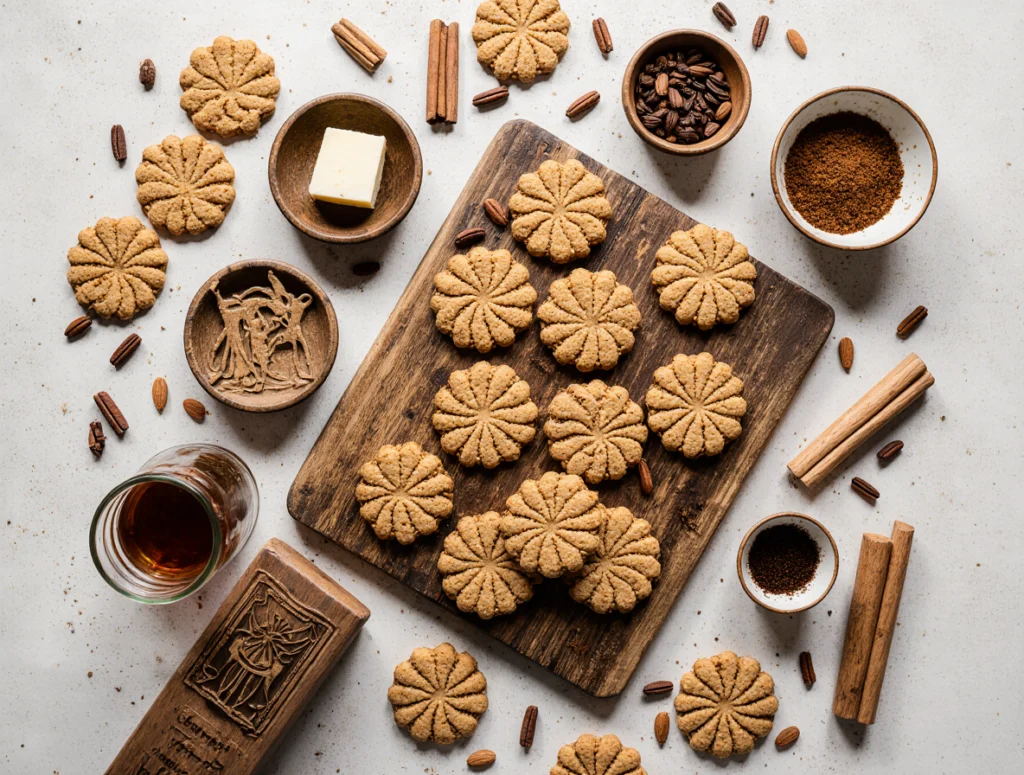
The journey from a simple mix of flour and spice to a perfect, crisp windmill cookie is one steeped in history and flavor. These dutch cookies are more than just a sweet treat; they are a culinary tradition, connecting us to the festive markets of Holland and Belgium. Whether you prefer the name speculoos, speculaas, or the recognizable “windmill,” the magic lies in the deep caramelization and the warmth of the spice blend.
You have now mastered the steps to create truly exceptional windmill cookies—a spicy, crunchy testament to centuries of European baking. Enjoy your homemade speculoos with your next cup of coffee or as a delightful dessert.