The Perfect Sourdough Bagels Recipe: 8 Steps to Chewy, Tangy Bliss
Table of Contents
Introduction
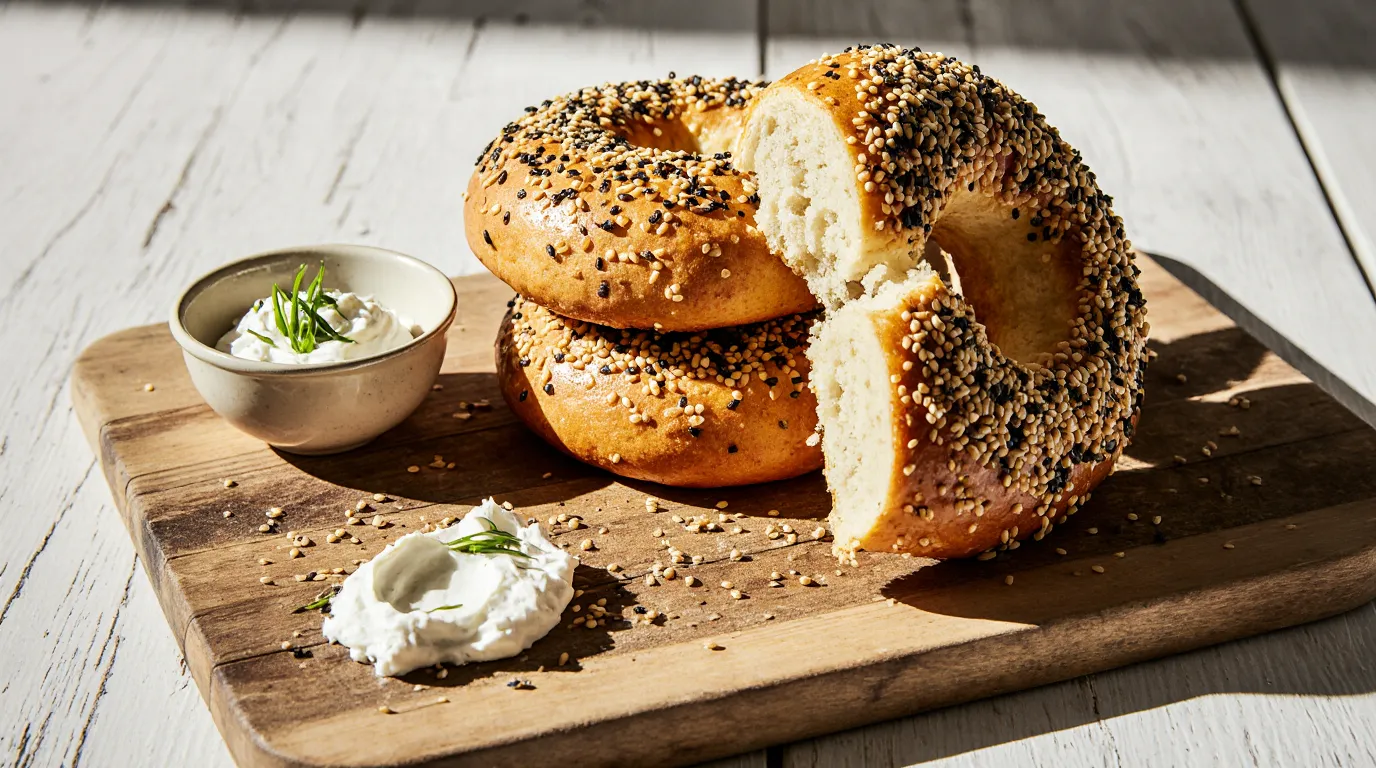
There is a distinct moment of satisfaction when you bite into a truly great bagel. It begins with a blistered, golden-brown crust that offers a slight resistance, followed immediately by a dense, chewy, and soft interior. While store-bought options are convenient, they often lack that depth of flavor and distinct texture. That is where this sourdough bagels recipe changes the game.
Making bagels at home might seem intimidation, but it is actually one of the most rewarding baking projects you can undertake. Unlike a sensitive open-crumb sourdough loaf, bagels are robust. They want to be handled. They forgive you if your shaping isn’t perfect.
In this ultimate guide, we are going to explore the science, the technique, and the soul of the best sourdough bagel recipe you will ever bake. We will cover everything from utilizing your excess starter for sourdough discard bagels to mastering the water bath. Whether you are a seasoned baker or someone just typing bagle recipe into a search bar hoping for a miracle, this post is your definitive resource.
Why Sourdough Makes the Best Bagels
Before we dive into the flour and water, we need to address why we are using sourdough. A traditional bagel recipe usually relies on commercial yeast to rise quickly. While efficient, this often leads to a bread-like texture rather than a true bagel “chew.”
The Texture Factor
Sourdough culture is wild. It works slower than commercial yeast. This slow fermentation allows the gluten network to develop differently. In this sourdough bagels recipe, the natural acidity strengthens the gluten, leading to that signature pull and chewiness that is often missing from rapid-rise versions.
The Flavor Profile
Commercial yeast provides a one-note flavor. Sourdough offers complexity. The lactic and acetic acids produced during fermentation give the bagel a subtle tang that pairs perfectly with rich cream cheese or savory meats.
Digestibility
Many people find sourdough discard bagels recipe variations easier on the stomach. The long fermentation process breaks down gluten and phytic acid, making the nutrients in the wheat more bioavailable.
Ingredients: The Foundation of a Great Bagel
To execute this sourdough bagels recipe, you do not need a pantry full of exotic items. However, quality matters.
1. The Flour
You cannot make a proper chewy bagel with standard All-Purpose flour. You need protein.
- High-Protein Bread Flour: This is non-negotiable for that classic chew. Look for protein content between 12% and 14%.
- Vital Wheat Gluten: If you can only find AP flour, adding a tablespoon of vital wheat gluten can mimic high-protein flour.
2. The Sourdough Starter
You have two routes here:
- Active Leaven: For the maximum rise and open structure.
- Discard: For flavor and waste reduction (we will cover sourdough discard bagels in detail later).
3. Sweetener
Malt is the traditional choice. Barley Malt Syrup gives bagels their distinct color and taste. If you cannot find it, honey or molasses are acceptable substitutes, but for the best sourdough bagel recipe, try to source malt syrup.
4. Water
Filtered water is best, as chlorine in tap water can inhibit your starter.
Equipment Needed
- Stand Mixer: Bagel dough is stiff (low hydration). Kneading by hand is possible but requires a workout.
- Kitchen Scale: We bake by weight, not volume, for consistency.
- Baking Sheet with Silpat or Parchment: For proofing and baking.
- Large Pot: For the water bath.
- Slotted Spoon: For flipping bagels in the boiling water.
The Master Sourdough Bagels Recipe (Step-by-Step)
This method focuses on a stiff dough, long fermentation, and a boil-then-bake technique.
Step 1: Levain Preparation
The night before you plan to mix your dough, build your levain. Mix 35g of your starter with 35g of flour and 35g of water. Let it rise until it peaks.
Step 2: Mixing the Dough
In the bowl of your stand mixer, combine:
- 100g Active Sourdough Starter (at peak)
- 250g Warm Water
- 500g Bread Flour
- 20g Sugar or Honey
- 10g Sea Salt
Note: If you are looking for how to make bagels easy, using a stand mixer is key. Mix on low speed for 2 minutes until combined. Then, increase speed to medium-low and knead for 6 to 8 minutes. The dough should be smooth, stiff, and satiny. It should pass the “windowpane test.”
Step 3: Bulk Fermentation
Place the dough in a lightly greased bowl. Cover with a damp towel. Let it sit at room temperature for 4 to 6 hours. Unlike a sourdough loaf, we are not looking for the dough to double in size—we just want it to puff up by about 50%. This creates a dense, chewy crumb rather than an airy ciabatta-like structure.
Step 4: Shaping (The Critical Skill)
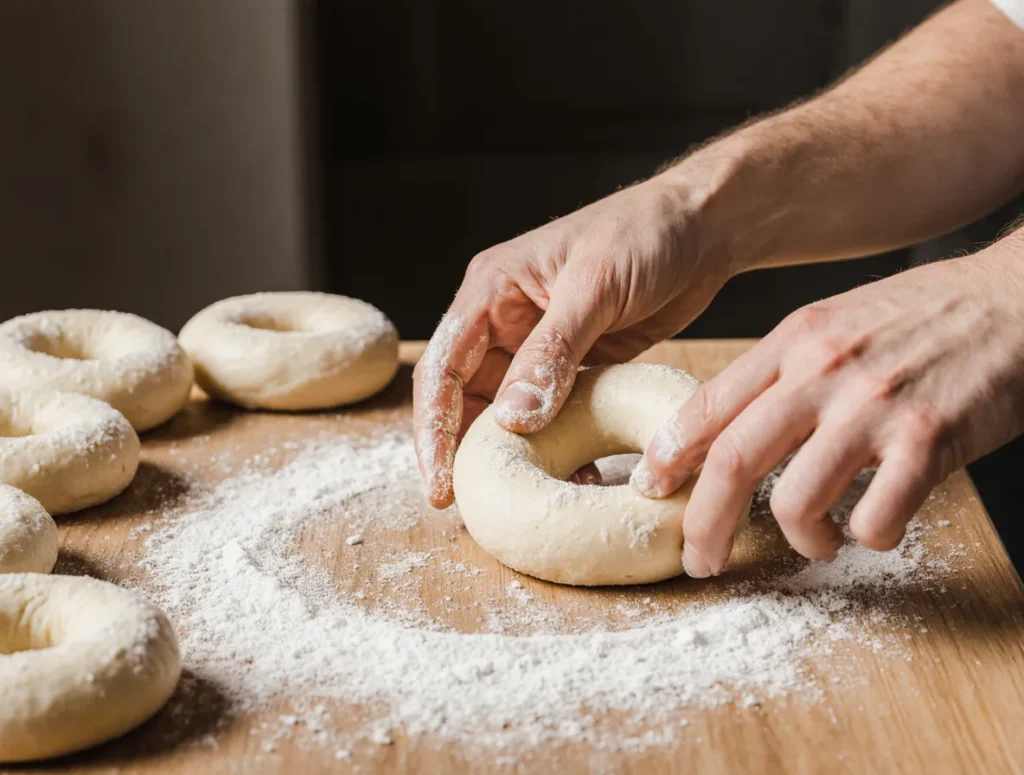
There are two main ways to shape a bagel.
- The Poke Method: Roll the dough into a ball. Stick your thumb through the center and stretch the hole. This is the easy bagels method.
- The Rope Method: Roll the dough into a snake. Wrap it around your hand and roll the seam on the counter to seal. This is the traditional method used in many professional bakeries.
Tip: If you have seen the rustic shapes of farmhouse on boone bagels, they often utilize a very tactile, hands-on shaping method. Don’t worry about perfect symmetry; rustic implies homemade love.
Step 5: The Cold Retard (Flavor Development)
Place your shaped bagels on a baking sheet lined with cornmeal or parchment paper. Cover them with plastic wrap to prevent a skin from forming. Place the tray in the refrigerator for 12 to 24 hours. This cold proof is where the “sour” in sourdough develops.
Step 6: The Boil
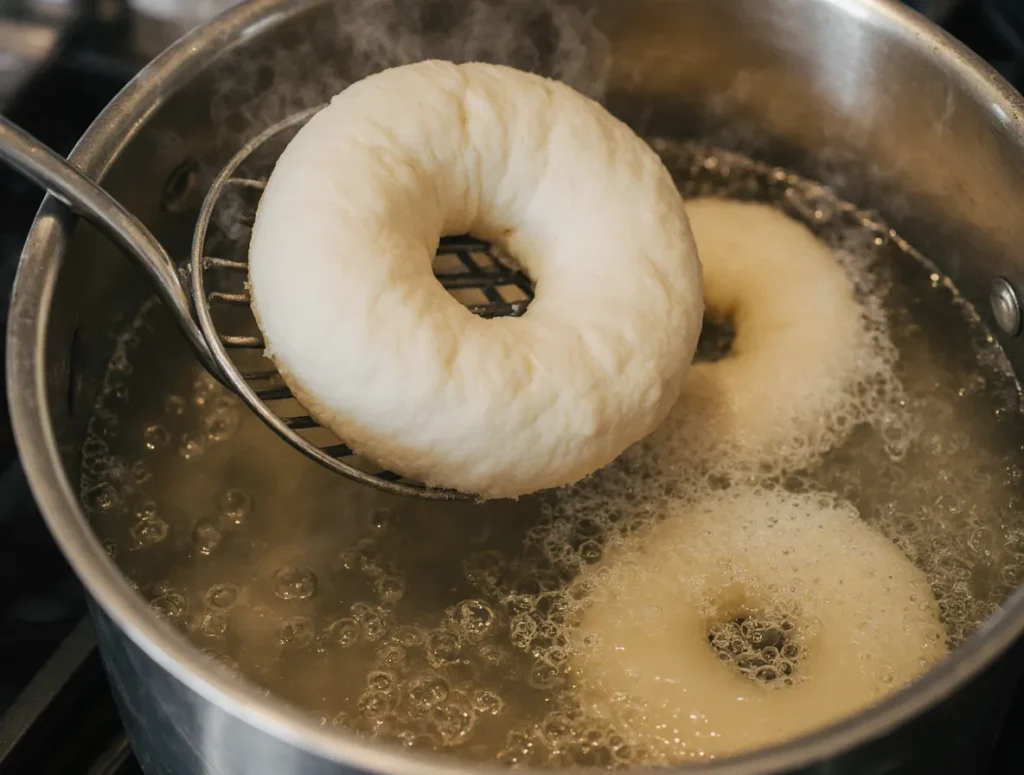
Preheat your oven to 425°F (220°C). Bring a large pot of water to a boil. Add 1 tablespoon of baking soda and 1 tablespoon of barley malt syrup (or sugar) to the water. The baking soda alkalizes the water, which helps gelatinize the crust, giving it that shine and snap.
Boil the bagels for 30 to 60 seconds per side.
- Shorter Boil: Thinner crust.
- Longer Boil: Chewier, thicker crust.
Step 7: Toppings
Brush the boiled bagels with an egg wash (optional) and dip them face down into your seeds. (See our section on best bagel toppings below).
Step 8: Baking
Bake for 20-25 minutes, rotating the pan halfway through. You want a deep golden brown color. Do not underbake! A pale bagel is a sad bagel.
Sourdough Discard Bagels: Zero Waste Baking
One of the most popular searches in the baking community is for sourdough discard bagels. If you maintain a starter, you know the guilt of throwing away the “discard” before feeding.
Discard bagels are slightly different from the active starter version. Because the yeast in the discard is less active (or dormant), we usually supplement the recipe with a tiny pinch of commercial yeast (hybrid method) OR we rely on a much longer fermentation time.
How to adapt for Sourdough Discard Bagels Recipe
To make a sourdough discard bagel recipe:
- Replace the 100g of active starter with 100g of cold discard.
- Add 1/2 tsp of instant yeast to the flour mixture.
- Follow the rest of the steps exactly.
The addition of the instant yeast ensures a reliable rise while the discard provides that depth of flavor. This is often considered the easy sourdough bagels route because you don’t have to wait for a levain to build.
Many bakers who follow the farmhouse on boone bagels style appreciate the utility of using discard. It embodies the farmhouse ethos: waste nothing, enjoy everything. The acidity in discard bagels can actually be higher, leading to a tangier result which cuts through the richness of cream cheese beautifully.
Troubleshooting Your Bagels
Even with a detailed sourdough bagels recipe, things can go wrong. Here is how to fix them.
Why are my bagels flat?
This is usually an issue of over-proofing. If the bagels sit too long in the fridge or on the counter, the yeast exhausts itself. When you boil them, they collapse. Watch your timing.
Why are they wrinkly?
Wrinkly skins happen if the dough wasn’t kneaded enough (lack of gluten tension) or if the bagels were boiled for too long. Stick to the 1 minute per side rule for a bagel recipe that stays smooth.
Why is the texture cakey?
You likely used All-Purpose flour or didn’t knead enough. The chew comes from developed gluten. If you want how to make bagels easy without the workout, let the stand mixer run for the full 8-10 minutes.
Flavor Variations and Toppings
Once you have mastered the base bagel sourdough recipe, it is time to experiment.
Best Bagel Toppings
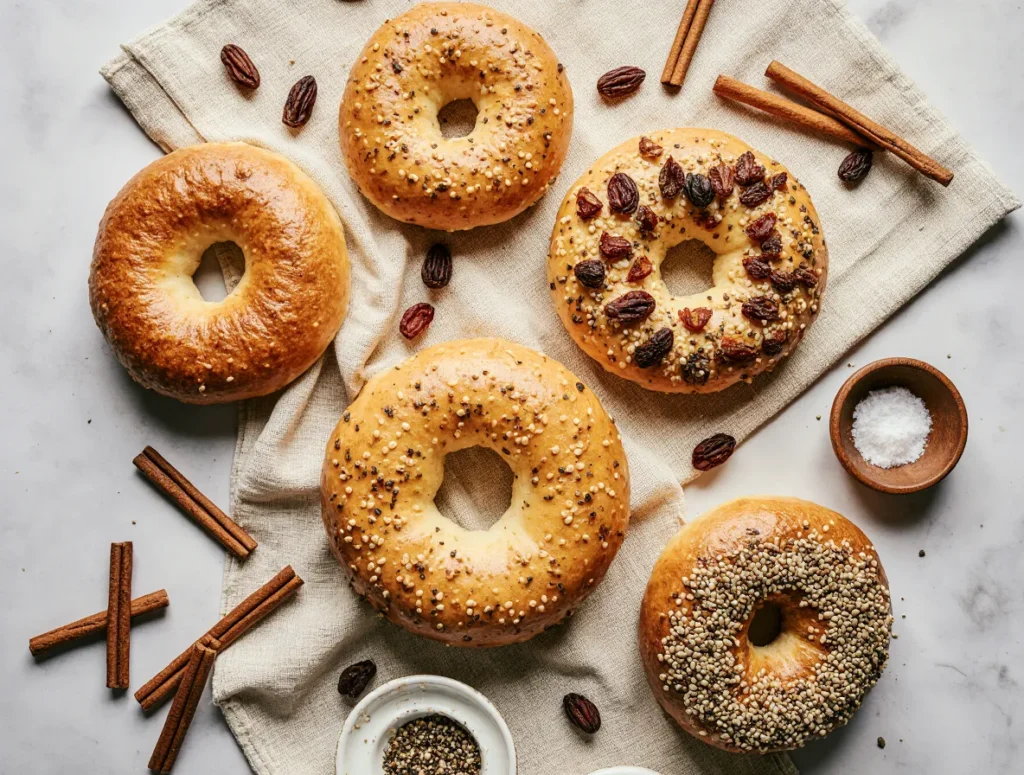
- Everything Bagel: Sesame seeds, poppy seeds, dried garlic, dried onion, flake salt.
- Sesame: Toasted white or black sesame seeds.
- Poppy: Classic and crunchy.
- Salt: Flaky Maldon salt (use sparingly).
- Cheese: Asiago or sharp cheddar melted on top during the last 5 minutes of baking.
Cinnamon Raisin Sourdough Bagels
For this sweet variation, increase the sugar in the dough to 40g. Add 1 teaspoon of cinnamon to the dry ingredients. Knead in 150g of soaked (and drained) raisins during the last minute of mixing.
Seed Bagels
Incorporating seeds inside the dough adds a nutty flavor profile. Soaked sunflower seeds, flax seeds, and pumpkin seeds are excellent additions to seed bagels.
Gluten Free Sourdough Bagels
This is the holy grail for celiacs. Gluten free sourdough bagels require a gluten-free sourdough starter (usually made from brown rice flour) and a blend of flours containing psyllium husk to mimic the gluten structure. While the texture won’t be identical to wheat, psyllium husk does a remarkable job of providing the necessary bind.
Comparing Styles: New York vs. Montreal vs. Farmhouse
When looking for how to make sourdough bagels, you will encounter different philosophies.
- New York Style: High salt, malt syrup, boiled, baked. Large and puffy.
- Montreal Style: Boiled in honey water, baked in wood-fired ovens. Smaller, denser, larger hole.
- Farmhouse Style: Think of farmhouse on boone bagels. These are often more rustic, sometimes using exclusively wild yeast without malt syrup, relying on honey or maple syrup. They prioritize wholesome ingredients over perfect commercial aesthetics.
Our sourdough bagels recipe leans towards the New York style but uses the natural leavening favored by the farmhouse community.
Serving Suggestions
You have pulled your fresh sourdough discard bagels recipe creation out of the oven. Now what?
- The Classic: Thick layer of plain cream cheese.
- The Lox: Cream cheese, smoked salmon, capers, red onion, and dill.
- The Lunch Sandwich: This is where things get interesting. A bagel makes a formidable sandwich vehicle.If you are looking for the perfect protein to fill your bagel, try a creamy Chicken Salad. You can find incredible inspiration and variations at https://www.mychickenrecipes.com. A cold chicken salad on a toasted, warm sourdough bagel is a lunch match made in heaven.
Common Questions (FAQ)
Q: Can I freeze these bagels? A: Absolutely. Slice them first, then freeze in an airtight bag. Toast directly from frozen. This makes having easy bagels on a Tuesday morning a reality.
Q: My search for “bagle recipe” brought me here. Is this hard for beginners? A: Not at all. Whether you spell it bagle recipe or bagel recipe, the process is the same. The hardest part is patience.
Q: Can I make this without a stand mixer? A: Yes, but prepare for a workout. How to make sourdough bagels by hand requires about 15 minutes of vigorous kneading.
Q: I saw a recipe for “clever carrot sourdough bagels” and “king arthur bagels.” How does this differ? A: King Arthur bagels recipes often use commercial yeast or a hybrid method for reliability. The clever carrot sourdough bagels are fantastic and often use a slightly higher hydration. Our recipe focuses specifically on maximizing the “chew” through lower hydration and cold fermentation.
Q: Can I use 100% discard? A: Yes, look for a specific discard bagel recipe that uses baking powder or commercial yeast to do the lifting, with the discard providing flavor.
Q: What if I don’t have barley malt syrup? A: Brown sugar or molasses are decent substitutes for the dough. For the boiling water, honey works well.
The Science of the “Chew”
Why do we obsess over the sourdough bagels recipe? It is about the gelatinization of starches.
When you drop the dough into boiling water, the starches on the surface of the bagel absorb water and swell, eventually bursting and gelatinizing. This sets the crust before the bagel enters the oven. This barrier prevents the bagel from rising too much in the oven (oven spring), forcing the crumb to remain dense and chewy.
If you skip the boil (like some bagel recipie attempts suggest), you end up with a round bread roll with a hole in it. It isn’t a bagel.
Flavor Ideas to Rotate
To keep your baking exciting, try rotating through these bagel flavor ideas:
- Blueberry Lemon: Dried blueberries and lemon zest in the dough.
- Jalapeño Cheddar: Diced fresh jalapeños and cheddar cubes.
- Sun-Dried Tomato & Basil: Perfect for savory sandwiches.
- Maple Pecan: Use maple syrup instead of malt and add chopped pecans.
Conclusion: The Joy of the Process
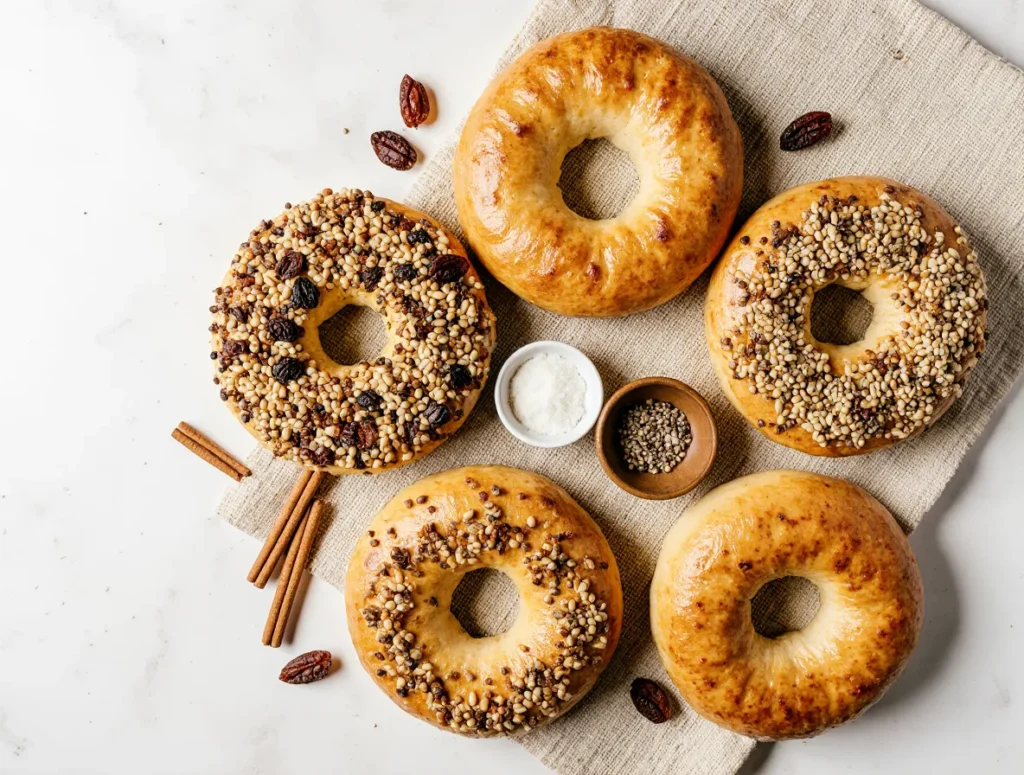
Mastering this sourdough bagels recipe is about more than just breakfast. It is about connecting with a slow food process in a fast-paced world. Whether you are making sourdough discard bagels to save waste, or meticulously crafting a batch for a brunch party, the effort is tasted in every bite.
There is a rustic beauty in homemade bread. Even if your first batch looks a bit like the rugged farmhouse on boone bagels, they will taste better than anything in a plastic bag from the grocery store.
So, feed your starter, clear your counter, and get ready to boil and bake. You now know how to make sourdough bagels that will impress everyone you know.
Do you have a favorite bagel topping I missed? Or perhaps a variation on the discard method? Let me know in the comments below!
Quick Reference: Sourdough Bagels Recipe
Prep time: 45 mins | Rise time: 18 hours | Cook time: 20 mins
Ingredients:
- 100g Active Starter
- 250g Water
- 500g Bread Flour
- 20g Malt Syrup or Honey
- 10g Salt
Steps:
- Mix dough.
- Knead until smooth.
- Bulk rise 4-6 hours.
- Shape.
- Cold retard (Fridge) 12+ hours.
- Boil with baking soda/syrup.
- Bake at 425°F.
Happy Baking!