The Perfect Authentic Injera Recipe: 5 Steps to Mastering the Sour Fermented Flatbread
Table of Contents
Introduction
If you have ever experienced the communal joy of an Ethiopian meal, you know that the star of the show isn’t just the spicy stews or the savory vegetables; it is the sour, spongy, crepe-like foundation they rest upon. That foundation is Injera.
Mastering a traditional injera recipe is a rite of passage for anyone who loves African cuisine. It is not just bread; it is the utensil, the plate, and the most flavorful component of the meal. While it has a reputation for being difficult to make outside of the Horn of Africa, this guide will demystify the process.
In this comprehensive post, we will explore the science, history, and technique behind the perfect injera recipe, ensuring you can recreate the authentic taste of Addis Ababa in your own kitchen.
Table of Contents
- What is Injera? The Heart of Ethiopian Cuisine
- The Magic Ingredient: All About Teff
- The Science of Fermentation
- Equipment You Will Need
- The Ultimate Authentic Injera Recipe
- Step-by-Step Instructions (The 5-Day Process)
- How to Pour and Cook Like a Pro
- Serving Suggestions: What to Eat with Injera
- Troubleshooting Your Batter
- Frequently Asked Questions
1. What is Injera? The Heart of Ethiopian Cuisine
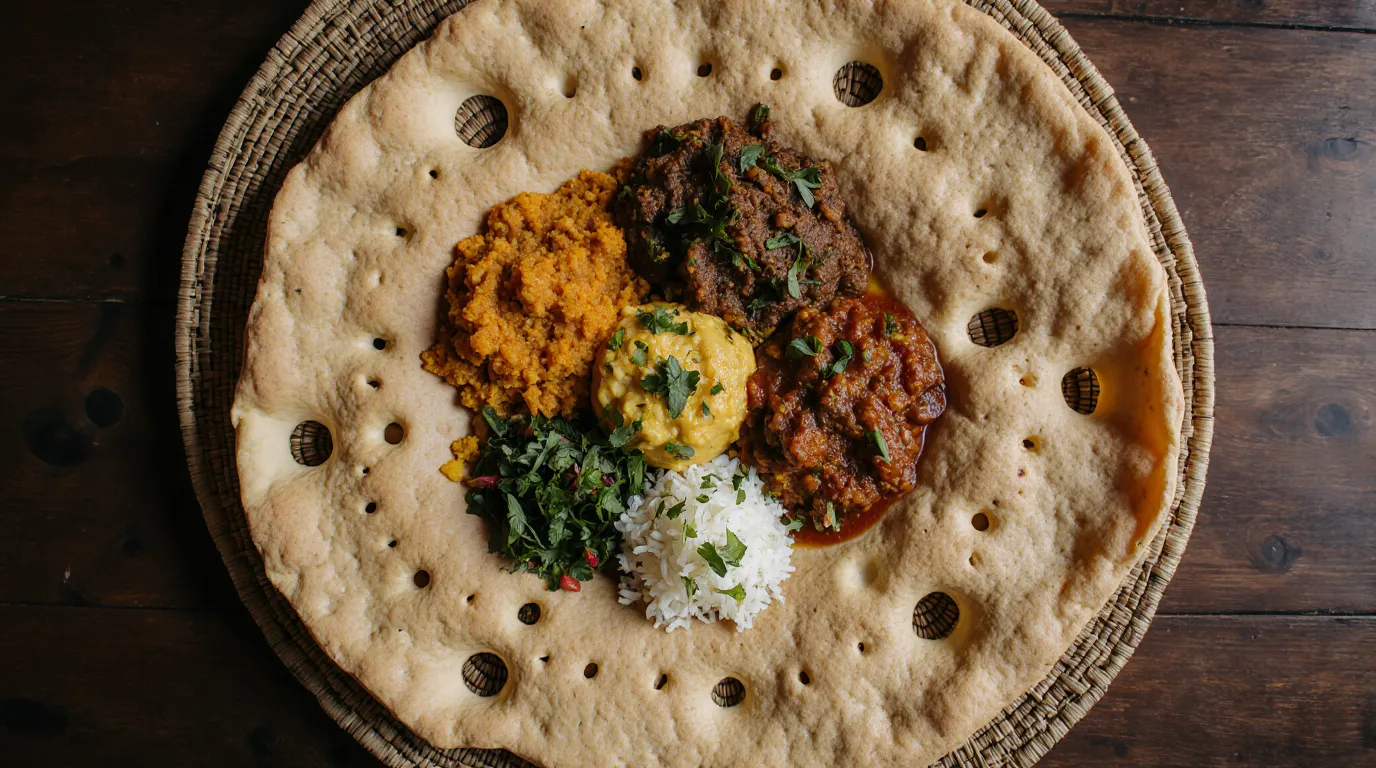
Ethopian bread, known as Injera, is a sourdough-risen flatbread with a unique, slightly spongy texture. Unlike the dry flatbreads of the Middle East or the naan of India, ethiopian injera is moist, flexible, and covered in tiny craters called “eyes” (aynekelo). These eyes are crucial as they soak up the juices of the ethiopian food recipes served atop it.
When we ask what is ethiopian bread called, the answer is almost universally Injera (sometimes spelled injira or engera). It is a staple food in Ethiopia, Eritrea, and parts of Somalia.
The Cultural Significance
In East African culture, eating is a communal act. A large circular injera food platter is placed in the center of the table, piled high with wats (stews) and salads. Everyone eats from the same plate, using their right hand to tear off pieces of the ethiopian bread to scoop up the food. This style of eating fosters a sense of loyalty and friendship.
The country of origin injera hails from is primarily Ethiopia, where it has been consumed for thousands of years. It is more than sustenance; it is a daily ritual.
2. The Magic Ingredient: All About Teff
To make a truly authentic injera recipe, you must understand the grain it is made from: Teff.
What is injera made of? Traditionally, it is made from 100% teff flour and water. Teff is an ancient grain, the size of a poppy seed, that is native to the Ethiopian highlands. It is the smallest grain in the world, yet it packs a nutritional punch.
Teff Flour for Injera
When looking for teff flour recipes, you will usually find two types of teff:
- Ivory (White) Teff: Has a milder flavor and is often preferred for a lighter-colored injera bread.
- Brown (Red) Teff: Has a nuttier, earthier flavor and is rich in iron.
What type of flour is used for injera bread? While you can find recipes using wheat or barley mixtures, the injera type of flour used for the most authentic flavor is 100% teff.
Is Injera Healthy?
Yes, is injera healthy is a common question with a positive answer. Teff is a superfood. It is high in protein, calcium, and iron. Furthermore, because of the fermentation process, the injera bread is rich in probiotics and easier to digest than unfermented breads.
Gluten and Dietary Needs
Is injera gluten free? If it is made with 100% teff, yes. Teff is naturally gluten-free. However, many restaurants mix teff with wheat flour to save costs or to make the fermentation process easier. If you are celiac, you must ask if it is teff bread or a blend. Does injera have gluten? Only if mixed with wheat or barley.
3. The Science of Fermentation
The signature sour taste of ethiopian injera comes from fermentation. This is not a recipe injera you can whip up in 30 minutes. It requires patience.
When you mix teff flour with water, wild yeast and lactobacillus bacteria (naturally present in the air and on the grain) begin to consume the sugars in the flour. This produces carbon dioxide (bubbles) and lactic acid (sour flavor).
This process is similar to making a sourdough starter. The fermentation can take anywhere from 2 to 5 days depending on the temperature of your kitchen. This long process is what transforms a simple batter into the complex ethiopian sponge bread we crave.
4. Equipment You Will Need
Before diving into how to make injera, ensure you have the right tools.
- Large Mixing Bowl: You need room for the batter to rise.
- The Mitad (or Mogogo): This is the traditional electric clay griddle used in Ethiopia.
- The Alternative: A high-quality non-stick skillet or a crepe maker (like a Lefse griddle). This is what most home cooks use for ethiopian recipes.
- A Lid: Essential for trapping steam to cook the top of the injera bread.
5. The Ultimate Authentic Injera Recipe
This is a traditional injera recipe using 100% teff flour. It requires a starter (ersho), but we will explain how to start from scratch.
Ingredients
- 4 cups Teff Flour (teff flour for injera is available online or at health food stores).
- 5 to 6 cups Filtered Water (chlorine can kill the wild yeast).
- 1 cup boiling water (for the “Absit”).
- 1/2 tsp Salt (optional).
6. Step-by-Step Instructions (The 5-Day Process)
Here is how make injera the right way. Do not rush this process.

Day 1: The Initial Mix
- In a large bowl, mix the teff flour with about 5 cups of lukewarm water.
- Knead this mixture by hand. Unlike wheat dough, teff flour recipes don’t require gluten development, but you want to ensure there are no dry lumps.
- The consistency should be thick, almost like a heavy mud.
- Cover with a cheesecloth or a loose lid to allow airflow. Wild yeast needs to breathe.
- Let it sit on the counter at room temperature.
Day 2: The Awakening
- Check your mixture. You should see the water separating from the solids. This is normal for ethiopian food bread.
- Do not disturb it too much. Just let the wild yeast do its work.
Day 3: The Fermentation
- By now, the mixture should smell sour. This is the distinct aroma of injera food.
- If you see bubbles forming on the surface, you are on the right track.
- If mold appears (fuzzy green/black), you must discard it. But a thin layer of dark liquid on top is fine; it is called “hooch” and protects the batter. Carefully pour the hooch off.
Day 4: The Absit (The Secret Step)
This is the most critical step regarding how do you make injera that has the proper texture. You must gelatinize a portion of the starches. This technique is called making the “Absit.”
- Boil 1 cup of water.
- Scoop out about 1/2 cup to 1 cup of your fermented batter and mix it into the boiling water in a saucepan.
- Cook this over low heat, stirring constantly, until it thickens into a porridge.
- Let this cooked mixture (Absit) cool to room temperature.
- Stir the cooled Absit back into your main batter bowl.
- Add a little more water if necessary to reach the consistency of heavy crepe batter.
- Let it ferment for one more day. The Absit triggers a second, vigorous fermentation.
Day 5: Cooking Day
- Your batter should be very bubbly and smell quite sour.
- Stir in the salt if using.
- Now you are ready to learn how to make injera bread on the stove.
7. How to Pour and Cook Like a Pro
Cooking injera bread recipe style requires a specific technique. It is cooked only on one side.
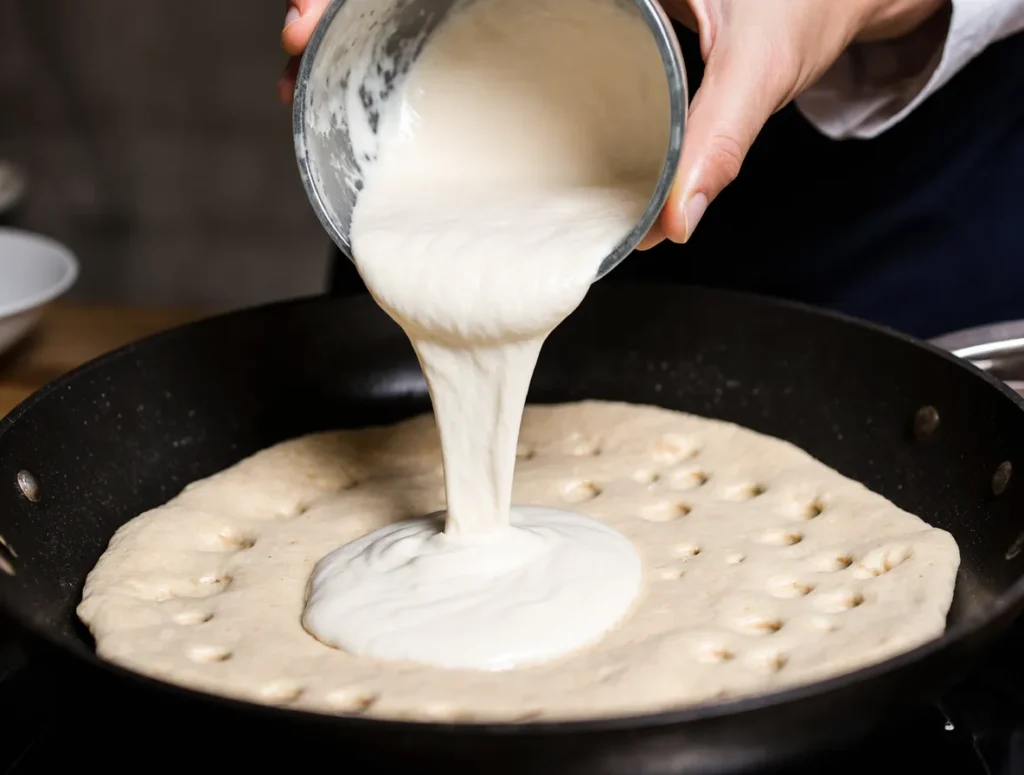
- Heat the Pan: Heat your non-stick skillet or mitad to medium-high heat. To test it, sprinkle a drop of water. It should sizzle and evaporate immediately.
- Pouring: Using a cup or a pitcher, pour the batter starting from the outside edge of the pan and spiral inward. This is the classic motion for ethiopian flatbread.
- The Bubbles: Wait about 30 seconds. You will see bubbles (eyes) popping all over the surface.
- The Lid: Once the eyes have formed but the batter is still wet, place the lid on the pan.
- Steam: Let it steam for 2-3 minutes. The steam cooks the top of the injera ethiopian bread so you don’t have to flip it.
- Removal: Remove the lid. The edges should lift slightly. Slide a thin plate or a large flat spatula under the bread and transfer it to a cooling rack (specifically a woven straw mat called a sefed if you have one).
- Cooling: Injera recipes always dictate that you must let it cool completely before stacking, or they will stick together.
8. Serving Suggestions: What to Eat with Injera
Now that you have your beautiful african bread, what do you put on it? Ethiopian food recipes are designed to be eaten with this bread.
The most famous pairing is Doro Wat, a spicy chicken stew simmered in berbere spice. For a fantastic poultry dish that pairs perfectly with your homemade bread, check out the options at My Chicken Recipes. While they offer various styles, you can adapt many chicken stews to sit beautifully atop your fresh injera.
Classic Combinations
- Misir Wat: Spicy red lentil stew.
- Kik Alicha: Mild yellow split pea stew.
- Gomen: Sautéed collard greens.
- Shiro: A chickpea flour stew.
What is the best way to eat injera? Tear off a piece of the ethiopian bread with your right hand. Place it over a bite-sized portion of the stew. Pinch the bread around the food, scooping it up, and pop it into your mouth. The sourness of the injera food cuts through the rich, spicy fat of the wats.
9. Troubleshooting Your Batter
Even seasoned cooks struggle with ethiopian bread recipe attempts. Here is how to fix common issues.
“My Injera has no eyes (holes).”
- Cause: The batter might be too thick, or the pan wasn’t hot enough.
- Fix: Add a tablespoon of water to thin the batter. Ensure your pan is hot before pouring. The injera with teff needs thermal shock to create bubbles.
“It is cracking when I roll it.”
- Cause: Overcooking or lack of “Absit.”
- Fix: Reduce cooking time. Ensure you did the Absit step (cooking the starter), as this provides the elasticity for recipes using teff.
“It is too sour.”
- Cause: Fermented too long.
- Fix: Next time, reduce fermentation by a day. For now, you can dilute the batter with fresh water and a little fresh flour, but let it sit for an hour before cooking.
“It is sticking to the pan.”
- Cause: Pan is not non-stick enough or is too cold.
- Fix: Cooking injera requires a pristine surface. Wipe the pan with a tiny bit of oil on a paper towel between each injera bread.
10. Frequently Asked Questions
Here we address specific questions about ethiopian food recipes and the bread itself.
What type of flour is used for injera?
As mentioned, the primary injera type of flour used is Teff. However, because teff is expensive outside of Ethiopia, many people make ethiopian breads using a mix of teff, barley, wheat, or even self-rising flour. However, for a gluten-free option, you must use 100% teff.
Can I make a Quick Injera Recipe?
Yes, there are injera recipes that use club soda or commercial yeast to simulate fermentation.
- Recipe: Mix teff flour, all-purpose flour, water, and instant yeast. Let rise for 1 hour.
- Result: It will look like injera ethiopian bread, but it will lack the deep, complex sour flavor of the traditional 5-day method.
What is the country of origin injera comes from?
The country of origin injera is primarily Ethiopia and Eritrea. It is the national dish of both countries. It is also found in Somalia (where it is called canjeero or lahoh, though the recipe differs slightly).
What is “Teff Injera”?
Teff injera simply refers to injera made exclusively or primarily with teff flour, distinguishing it from versions made with rice flour or wheat flour. How to cook teff as a grain is different (similar to porridge), but for bread, it is always fermented.
How do I store leftovers?
Ethiopian injera dries out quickly. Stack the cooled breads, wrap them tightly in plastic wrap or foil, and keep them in the refrigerator. To reheat, wrap them in a damp paper towel and microwave for 30 seconds.
Is “Injira” or “Engera” different?
No. Injira and engera are just phonetic spellings of the same word. Whether you search for injera bread country of origin or injera recipes, you are looking for the same delicious african bread.
What is Ethiopian bread called in Amharic?
It is strictly called Injera. The “eyes” are called aynekelo. The starter is called ersho.
How to make injera bread without a Mitad?
Using a large non-stick crepe pan is the best alternative. The key is even heat distribution. If you enjoy ethiopian recipes often, investing in a dedicated electric griddle is worth it.
Can I use brown or ivory teff?
You can use either. Teff flour for injera comes in both varieties. Ivory teff makes a lighter, milder bread. Brown teff makes a darker ethopian bread with a more robust flavor. Many households mix them.
What if I can’t find Teff?
If you cannot find teff, you can experiment with buckwheat flour or whole wheat flour, but the flavor profile will not be authentic. What is injera made of dictates the flavor, and teff has a unique fermented sourness that wheat cannot replicate perfectly.
Is raw teff batter safe?
You should not eat raw batter. However, once cooked, the teff recipe is perfectly safe. The fermentation creates an acidic environment that actually kills off harmful bacteria, making ethiopian teff bread very safe to eat.
Why is my batter separating?
This is good! The yellow liquid on top is water and byproducts of fermentation. Pour it off and replace it with fresh water if you want a milder taste, or stir it back in for extra sourness. This is a standard part of ethiopian food bread making.
Conclusion: The Reward of Patience

Making this injera recipe is a labor of love. It requires monitoring, patience, and a bit of intuition. But the moment you peel that soft, bubbly ethiopian bread off the griddle and smell the earthy, sour aroma, you will know it was worth it.
By using teff flour recipes and sticking to traditional methods, you are not just cooking; you are participating in an ancient culinary tradition. Whether you are serving it with a spicy chicken stew from My Chicken Recipes or a vegan lentil wat, your homemade injera will elevate the meal to a restaurant-quality experience.
Now that you know how to make injera, it is time to start your batter. In five days, a feast awaits.